Le Infezioni in Medicina, n. 1, 145-156, 2021
INFECTIONS IN THE HISTORY OF MEDICINE
The plague which hit the city of Bologna in the year 1630
Sergio Sabbatani1, Sirio Fiorino2, Roberto Manfredi3
1Infectious Diseases Specialist;
2 Internal Medicine, Budrio Hospital, Azienda USL di Bologna, Bologna, Italy;
3Infectious Disease Institute, Policlinico S. Orsola-Malpighi, Bologna University, Bologna, Italy
Corresponding author
Sergio Sabbatani
E-mail: s.sabbatani53@gmail.com
SummaRY
In the year 1630, similarly to other cities of Northern Italy, Bologna was affected by a plague epidemic. It occurred after the arrival of Lansquenet troops, engaged by the Emperor Frederick II in the siege of Mantua city. The human losses have been calculated by the historian demographer Bellettini in the terms of around 15,000 people, so that the number of inhabitants in Bologna declined from 62,000 to 47,000 units in the time span of 7-8 months. Initially, during the winter and the early spring, although the plague epidemic had been known after that it involved many cities close to Bologna (i.e. Turin, Milan, Venice, Genoa and Verona), the population tried to keep the epidemic hidden, being afraid that commerce exchanged could be affected by this event. Later, starting from the month of May, under the guidance of cardinal Bernardino Spada, cooperating with the numerous religious orders and in particular with the one of Camillians, the city reacted, launching an organization effort which significantly aided in the containment of the plague epidemic. A number of Lazzarettos were organized outside of the city walls and relevant sums supported the clean operation of over 3,000 houses. The city Senate sustained the poor population with a sum of 700,000 lire and grain donations. Even if the loss of human lives was high, it resulted not so dramatic, compared with that paid by other Italian cities. From a cultural point of view, according to the belief of the scientific knowledge of that time, the miasmatic theories were still considered satisfactory, although in the common practice the people who could leave the city escaped from Bologna, in order to avoid the contagion.
We can argue that the impact of the epidemic was reduced by means of the organizational approach with strict isolation measures for sick persons, the closing of the city walls in the urban areas more affected by the plague, and finally a sanctionatory and punitive approach for individuals, who disregarded the applied rules.
Keywords: Plague, Landsknechts, infectious diseases.
INTRODUCTION
In a previous research of ours we retrieved some documents catalogued and kept at the State Archives of Bologna and we re-assessed the historic-demographic figures of the Bologna city population published by Bellettini in 1960s, with the purpose to study the events occurred in the city of Bologna and its surroundings in the year 1527 [1, 2]. The authors, who did not live during those times, reported that in the year 1527, the city of Bologna and its neighbourhood had been involved by a plague epidemic. In particular, Moreschi in a paper written around 300 years after the events, proposed an estimate of around 12,000 people dead in the year 1527; the city at that time hosted around 55,000 inhabitants [2, 3]. Such a relevant amount of deaths was expected to cause a true slaughter and this massacre should have determined a severe demographic impact with secondary effects causing a huge decline of the city over the entire century. Actually, such a decline was not recorded by the local chronicles. From a research of ours conducted at the State Archive of Bologna no documents had been retrieved, including in particular laws and municipal orders, pointing out particular health alerts during the year 1527 and in the following years [1]. The historian demography published by Bellettini did not show a deflection of Bologna population in the first half of the XVI century; on the contrary the population remained indeed stable, showing a demographic increase during the decade 1580-1590 [2]. In summary, our research showed that in the year 1527 a small plague epidemic occurred. It involved some families, living in one of most peripheral and of the poorest urban area, very close to the city walls, which was named Borgo di San Pietro (St. Peter district). This introduction becomes interesting in the perspective of a study on the tragic epidemic, which scourged Bologna during the year 1630. In the year 1527, probably due to the fear of the plague diffusion (after the Lansquenets invasion the entire Italy had been scourged by this infectious disease together with the famine following war events), the activity of a Fraternity of believers of Our Lady had emerged and had consolidated. It had been founded a few years before. Briefly, ten years before, in the year 1527, the devotion of the residents, living in the small St. Peter district had inspired the construction of a small church, located just near the city walls [4]. This church was built in the same place where a wooden statue of the Blessed Virgin, sculpted in the XIII century, had been located. According to the tradition, just the health risk led to the flourishment of the worship of Our Lady, concurrently with the increase of the charitable activities of the Brotherhoods of believers in the city. Starting from 1527, this worship extended to the whole city of Bologna. Later, The Holy Virgin of the St. Peter district was called Madonna del Soccorso, (Our Lady of the Rescue) and the small church took the same name.
The plague epidemic in Bologna, in the year 1630
In the city of Bologna, the witness and chronicler of facts was an Abbot of the Celestines’ monastry, Father Pietro Moratti [5]. Beyond his personal witness and that of citizens who escaped the plague epidemic, he reported data from all large and small documents produced at that time. First of all, we remind the collection of public notices and laws promulgated during the critical period when, under the guidance of the Cardinal Bernardino Spada1, the city activated all its resources in order to face the epidemic scourge, Father Moratti also considered the documents produced by the city Magistrature, and the memories written by the physicians who were engaged during the plague epidemic and left their testimonial [6] (Figure 1).

Figure 1 - Title page of the complete collection of all public notices, orders, and provisions.
Another ecclesiastical writer, Father Luigi da Gatteo, after around three centuries carried out his search, by consulting the available bibliographic documents, and the archive sources. This priest wrote an essay where he reported the acts of the Magistrature, the health care providers, and the correspondence kept with the Rome embassy [7]. In the fight against the plague epidemic in Bologna, during the year 1630, a relevant role was played by the cardinal Bernardino Spada (Brisighella 1594-Roma 1661). This high prelate was present and active during the entire period of the plague scourge, coordinating the efforts aimed to limit the contagion and working to help the poorer population, forced to remain in the city. The cardinal Spada was able to rely on the work of the Camillian fathers, who were present in the city with a comunity of around 20 priests (professed members, students, and some oblates); the Superior of Camillian order was represented by Father Giovanni Battista Campana from Rome, aged 28 years only. During the 7 months of the epidemic the majority of Bologna inhabitants could not take refuge in the countryside or in the numerous mansions located in the near hills and mountains, differently from nobles and rich people belonging to the merchant classes. Cardinal Spada took his place, whereas the behavoiur of the Cardinal legate Antonio Barberini (Pope Urbano VIII’s nephew), was less commendable, since he escaped to Bertinoro2 and remained there during the entire period of the epidemic. All Magistrates, physicians, health care personnel and Lazaretto officers asked for a guidance to the Cardinal Spada. He was the highest religious authority of the city and exerted as vicarious the politic power too. The Cardinal Spada kept all contacts with the Cardinal Francesco Barberini, who informed the Pope of Rome on the course of the scourge. In brief, should a direction be recognised in the contrast of plague epidemic during the year 1630, this role was played by the Cardinal Bernardino Spada (Figure 2).
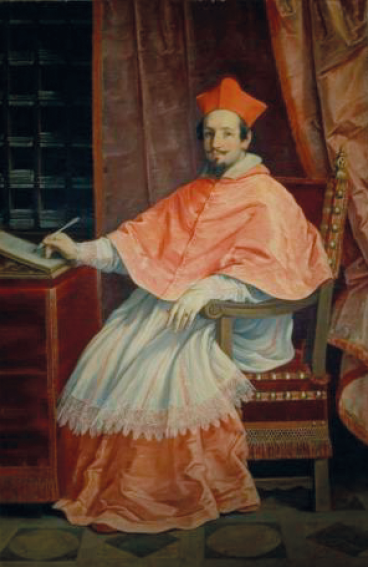
Figure 2 - The Cardinal Bernardino Spada (by Guido Reni, 1631, in Galleria Spada, Rome).
In his important volume “la Peste a Bologna nel 1630” [8] Brighetti notices that Cardinal Spada did not have “come il suo confratello nella Sacra porpora Federico Borromeo, un Manzoni a tessere le meritevoli lodi… (in the same way as his confrere in the Sacred purple Federico Borromeo, a writer like Manzoni to weave the deserving praise)”. Dr. Ambrosini, who hardly worked in Bologna during the epidemic, wrote: “A noi viventi e posteri la sua prudenza, la solerzia e la vigilanza nella peste lo mostrano come stella fulgidissima della Chiesa cattolica (“To us living and to the posterity his prudence, diligence and vigilance in the plague show him as a shining star of the Catholic Church”) [9]. Mariani, turning to him in Latin wrote: “Tum est, ne ulterius per Aemiliam expatria, longo ordine ad septem Colles altius triumphatura processit. Debent hoc tibi tot gentes, et populi ipsaque rerum caput Roma, si hoc virus Lernao contumacius inter tuas manus espiravi”3. During the 31 months of the plague risk in Bologna, Bernardino Spada published and made executive even 44 public notices, 20 orders, 13 notifications, 5 provisions, 4 edicts, 4 advices, 2 instructions and one exhortation [6]. The Camillian friars helped him, giving a caritative support to people affected by plague. Overall, nine Camillian friars dead from plague in Bologna, but also other friars acquired the disease. The Camillians also covered the place of the four general Visitors, one for every city district: they had the power to make executive all the dispositions of the Assunteria [11]. Beyond Cardinal Spada, among the high prelates Monsignor Albergati remained in the city. Furthermore, some people also transferred to Bologna, while the plague epidemic was still in full expansion. Thanks to a letter written on April 27th, 1630, we know that Camillian Fathers from Rome desired to “come and work for the health of both souls and bodies”. The Cardinal Francesco Barberini wrote the following words from Castelgandolfo: “The General of Fathers, Ministre of sick people, immediately after receiving the letter from your Excellency, was himself determined to come to Bologna to serve in the local Lazarettos, but as he lacked a favourable opinion by his counsellors, he ordered to two priests and two secular members of his Order (the Camillian Order), their transfer to Bologna, with the purpose to carry out the dispositions of His Excellency, as he will propose:”. The Cardinal Spada had a full support by the Pope, considering the escape of the Papal legate which occurred on June 18th, 1630, on the other hand, the relationship was not equally satisfactory with the civic Magistrates and in particular with the aristocratic class, which was very potent in the city since ever; we can add that probably the generous committment for the poor population by the high prelate was not accepted with pleasure. The Holy see acted in a pragmatic way during the plague epidemic. Taking into account of the Papal Legate’s escape, the Pope established that Cardinal Spada would have taken the place of Antonio Barberini, in particular in the administration of the Monte di Pietà (the local pawn agency), during the plague epidemic. The governance in Bologna was firmly in the hands of the Pope, who locally remitted his power to papal legates since around 120 years, during Pope Giulio II’s pontificate4. The Libertas (Liberty image), which is known to adorn the emblem of the city in Bologna, was formally safeguarded by a local Magistarature, named the Reggimento. At that time, il Senato dei Cinquanta (the Senate of Fifties), was controlled by the Gonfalonier of Justice, who was drawn every two months. The Gonfalonier controlled the Assunterie, hold by different persons. They were expressed by the nobility of the city; the Podestà (Mayor) represented the highest secular authority. A complex balance was therefore established between the central Pontifical power and the local power retained by the noble senatorial Bolognese families5. The year 1630 was a tragic year because of the plague epidemic. This outbreak was named “peste del Manzoni” (Manzoni’s plague), which has been masterly described by the best Italian writer of the XIX century Alessandro Manzoni), in his masterpiece, the novel “I Promessi Sposi”. As reknown, the pestilence was brought in Northern Italy6 by the Lansquenet troops of the Emperor Frederick II, sent during September-October 1629 to siege the city of Mantua. During the Winter between years 1629 and 1630 many soldiers, and also high officers of the Imperial Army, who besieged the city of Mantua died with evident signs of plague. In the city of Bologna, the alarm was given by the representatives of the central government. In the month of November 1629, Bernardino Spada became informed that in Modena numerous clinical cases had occurred, so that he informed The Gonfalonier of Justice and the Assunti di Sanità (Health Care Officers), with the aim to establish a preventive strategy. However, it has to be underlined that a low profile was initially kept, characterized by an imprudent concealment of the problem, since they tended to keep hidden the notice of the advancing epidemic to both inhabitants in Bologna and foreign citizens, in order to avoid scaring the people living in Bologna inhabitants and avoid the interruption of commercial contacts. They were afraid that the closing of city doors and the reduction of commercial activity would have caused an economic crisis. All of them were worried about the hunger: based on the historical experience, after a plague epidemic a severe famine was expected.
After the plague epidemic in the XIV century and following the abandonment of fields due to the demographic loss, an extremely severe famine occurred. Obviously, the keeping the problem hidden, largely contributed to the explosion of the epidemic. The physicians, who realized this irresponsible attitude, decided to ask the Government in delegation, to correct this imprudent attitude. On November 4th, 1629, a first provision for the city of Bologna and its surroundings was published. A check point was established for individuals having the purpose to enter the city and coming from other cities and countries, these persons should have got a health certificate released at the time of their departure. Moveover, an adjunctive border control was introduced, by forbidding the entrance to all drifters, gypsies, cripples and all persons who had body sores and wounds. The people who transgressed the laws were severey punished: three sections of rope were applied or these individuals were sentenced to prison. However, it has to be underlined that usually tramps or people of uncertain origin and living at the edge of the society close to inhabited areas, were punished. Children (the abandoned childhood was a reality among popular classes) were punished with 50 lashes. Coming to innkeepers, hosts, grooms, and similar categories of workers, considered at social risk due to their merchant contacts, should they infringe health care bands and laws, not only three sections of rope but also a fine of 25 scudi and emprisonment were established. In the Winter between the years 1629 and 1630, all Italian cities were on alert. The commercial traffic with Milan was suspended by Genoa on March 14th, 1630, the same measure was issued by Venice on March 23rd; two days later the city of Verona acted in the same way, followed by Lucca on April 3rd and Bologna on April 5th. The city of Rome closed its city walls on April 12th, 1630 [12]. After the initial alert, in the city of Bologna the suspect emerged, which later turned into the terror when months elapsed, until late Spring, while the increasing confirmations of suspected deaths became known. It seems that the plague, after a first (and somewhat generic) alarm launched in November 1629, entered the city of Bologna during February, 1630. However, according to documents stored at the State Archive of Bologna, the official date of entry of the plague in the city of Bologna should be on May 6th, 1630. Actually, according to unconfirmed informations, into the hills surrounding Bologna where he had retired, even the brother of the Pope, Father Carlo Barberini, went to death on February 26th, 1630. Masini in his volume: “Bologna perlustrata”7 published in the year 1666, wrote that May 6th was: “an unfortunate and memorable day for the city of Bologna, since the contagious pestilence had its start, and that the epidemic continued until January 13th, 1631” [10]. The date of May 6th was pointed out as the official date of ascertained start of the epidemic. This fact is confirmed by a public notice which ordered to keep all streets free from rubbish, able to spread smells, stink, and miasmas in the air, possibly affecting public health. Another provision prohibited the discharge of rubbish and wrecks in the Reno river canal, while other scapts could be discharged into the Aposa torrent8. Leather workers, who conducted a very flourishing activity in the city as well as paper manufacturers, were ordered to tranfer their activity near to the Grada, located under the Moline canal, or at the Grada near to the Reno river’s canal at St: Felice place, outside of the city walls. The city of Bologna was crossed by a network of canals (Figure 3), supplied by the Reno river and its tributay torrent Savena.

Figure 3 - A cartographic map of Bologna, with the network of canals crossing the city.
The evidence that among the first people interested by the plague epidemic there were the washerwomen who worked in the numerous canals which crossed the city, led to imagine that water itself had the major responsibility in the spread of contagion. The first focuses of the epidemic occurred in Savonella street and in the Parish of Mascarella; in fact these overpopulated and degraded areas from an hygienic point of view were crossed by canals. It has to be considered that during the previous century, in the year 1527, only the Mascarella district was involved by an ascertained focus of plague [1]. According to Galeati the early deaths were reported in the month of April, 1630, in the Borghi dell’Oro, dell’Ariento and Orfeo districts (Figure 4).

Figure 4 - A particular of the cartographic map of Borgo dell’Oro (Bologna City centre).
The Da Gatteo, who examined the documents and order some centuries later, wrote: “Of certain should somebody has to establish the date of the plague epidemic start, the sites which were involved early, on the ground of official orders, laws, and public notices, it is simply impossible. A detailed and meticulous analysis is needed and this operation is simply impossible” [7]. This author concludes that: The sole understandable concept is the following: special attention in avoiding the alert in the people, to remain vague as far as possible, and to provide to everyrhing without giving any detail [7]. Finally, during the late Spring, when it became impossible to negate evidences, the first ordered to establish a Lazaretto in the site of Belpoggio beyond the city walls outside of Strada Maggiore. A second one followed in Castel Franco, a third one at Maccagnano out of the Lame city door and finally one in the site of our Lady of Angels, out of the St. Mamolo city door. The first three structures hosted subjects wih a suspected plague, while the fourth site kept the patients with a full-blown plague [5]. On June 7th, because of the plague epidemic both a monastery and the church of Philippine Fathers were closed.
Four days later a female hospital was established into the Annunziata Convent, able to hospitalize 750 patients. The close surroundings included: the above mentioned Our Lady of Angels with its houses and its tavern was devoluted to the assistance of men. The Monastery of the Water assigned to host those who had to provide help in these areas. The St. Mamolo city door was closed to prevent people from entering the city and close to the moat some gallows were placed, which were used later to hang a man called Cinto Cinti who being imprisoned in irons had been damned to serve in the Lazaretto, but after his flight and arrest was finally executed. The Servi Monastery of St. Giuseppe, out of the Saragozza city door, was involved in the assistance of convalecents, while the friars were hosted in a close palace. During the continuation of the plague epidemic, a further hospital was set in the Church of St. Paolo of Ravone, out of the St. Isaia city door. Starting from June 16th, all houses and districts judged as infected were walled with bricks; the entire Castiglione Street was walled from the house of the Cicognani family until the wall door. A similar destiny involved the following districts: Borghi dell’Oro, dell’Ariento, Orfeo; Pozzo Rosso and Angels Street. In the same days, gallows were erected in the place called St. Bernardo, to clearly alert those who thought to exit the forbidden areas. Since children and women represented the population groups more vulnerable to the plague, on July 27th they were forbidden to leave their home, and this notice was maintained until the Chistmas day in 1630. During the subsequent Summer time, since the scourge still continued to rage, a project for a very large Lazaretto was conceived outside of the St. Vitale city door, which was extended from the St. Orsola Hospital until the Beggars Church. This first one was available since the month of September. The dead bodies accumulated and in early July a first mass grave was excavated closed to the Grada location. The corpses were collected and trasferred by a large van which was capable to contain 20-25 bodies; this mass grave became full very soon, so that two additional cemeteries were digged far from the city, near the Reno river and the Savena torrent. The months of July and August were the most tragic ones, with 10,975 victims on the whole. Because of these events, the traditional feast of Roast Pork and the usually employed sum was donated in suffrage of the dead souls. During the time of epidemic danger, 3,327 houses were comprehensively sanitized, with an expenditure by the Senate of 10,260 lire for 2,067 houses which were not defined poor, added to 1,262 more houses defined poor, and sanitized with other fundings. The people was on their last legs. On August 26th, 1630, a popular religious vow was ordered, which was respected for the first time on December 21st, the feast of St. John the Evangelist through a large votive procession directed to Our Lady of Rosary. In that day, the population brought in procession to the St. Domenico Basilica the Pallium (Figure 5), as an ex voto image depicted in a short time by the painter Guido Reni. as a votive request of the Bolognese people9.

Figura 5 - Altarpiece by Guido Reni,1631, Pinacoteca Nazionale, Bologna).
From a psychological point of view, a particular gloomy mood pervaded the city. Pietro Moratti writes that the citizens avoided each other and they were also incapable to accompany the corpses to the cemetery: “individuals avoided each other and the neighbours abandoned the neighbours… sometimes the brother abandoned his brother, the wife her husband, and finally also parents escaped from the view of their sons affected by the plague… no more relaties, no more friends accompanied the corpses to the quiet of the cemetery: only a priest and two gravediggers brought the corpses to the cemetery or to the nearest church [5]. These sentences follow closely the description of the plague epidemic in Florence in the year 1348, depicted by Giovanni Boccaccio in its introduction to the Decameron masterpiece. Given the impotence in constrasting the epidemic during the subsequent months, the severity against those who infringed laws and rules became particulary rigorous. On September 7th, 1630, a physician named Matteo Pistorini was arrested and later sent to care for sick people, since he falsely certified that a colleague did not die from the plague acquired in the contagion on August 23rd. The physician Pistorini was whipped and later sent for a further punishment to “give assistance to the plague patients”. The scourge reached its maximum violence during Summertime, falled significantly during Autumn, and finally it disappeared during Winter. Now let’s come to the description of clinical features. Pietro Moratti wrote in his volume10: Under the armpits a swelling rapidly appeared, which was named ‘govaccioli’ and the body became covered by black or livid marks. They were sometimes large and sparse, sometimes small and extremely frequent”. He also described: ’bogni’, swellings, carbuncle-like lesions, and enlarged lymp nodes at groins and under the armpits, under the arms, and in the brain excretory system under the ears, with headache, fever, severe thirst, delirium, sleep, vomiting and body tremors” [5]. In fact, they were all the signs and symptoms described 300 years before by the writer Boccaccio. We remind that St. Rocco, the patron saint against the plague, is always represented ini the artistic devotional paintings with a bubo tipically localized in the groin region (Figure 6).

Figura 6 - St. Rocco (by Parmigianino, 1527, San Petronio Basilica, Bologna).
What about the human cost of plague in Bologna? Comprehensively, according to figures elaborated in that time [5], whose reliability is uncertain, 23,691 people went to death in the period April 1630-January 1631, with further 1,181 deaths due to other causes11 [5]. In the Figure 7 the graph shows how relevant was the loss of Bolognese population, according to the data reported by Bellettini and coming from the Parish registries, in the year 1630, compared with the historical period 1550-1775 [2].

Figura 7 - Population trends in the city of Bologna from the XVI up to the XVIII century. Graph realized according to the data reported by Bellettini’s studies [2].
According to the data reported by Bellettini the City population declined from around 62,000 to around 47,000 inhabitants, with an overall loss of around 15.000 Bolognese inhabitans (24%) in the time span of eight months. At that time, a schematic and unlikely subdivision by gender was performed. We report it in order to allow a complete appraisal and a discussion on the population social-demographic features considered in the XVII century. According to these figures, the deceased women were 11,561, the men were 11,128, with the adjunct of 162 more persons defined as nobles and citizens.
The group of women officially included in the category of harlots, paid a severe tribute, with 234 deaths. The class of porters accounted for 361 deaths. The urban clergy (excluding the conventual friars) had 33 deaths. The health care officers were very exposed to the contagion: 27 lose their life, the dead barbers were 8712, among medical assistants, 17 went to death. Finally, 48 deaths were recordered among coachmen (who carried the corpses), and 23 among gravediggers [5].
Among cloistered monks 177 out of 1,239 died from plague and further 30 from a disease, defined common. It is interesting to notice that among religious orders some of them would have not had deaths due to the plague: i.e. the Olivetans who were located at the St. Michele in Bosco Sanctuary, the regular Clerics of St. Prospero, the Carthusian monks who led a cloistered life and the friar in sSt, Barbaziano and in St, Procolo Convents. Among the most affected friars, we remind: the Discalced friars (10 deaths out of 38), the Capuchin friars (15 out of 74), the friars in St: Giacomo Convent (19 of 43), the Gesuites (20 of 41), the Gesuates (16 of 27), the friars in St, Giuseppe Convent (16 out of 35). Moreover, 9 Camillian friars have to be added.
With regard to the city surroundings, the estimate gives a comprehensive number of around 16,300 dead individuals, during the epidemic period. From an economic point of view, the Bolognese Senate sustained a supplementary expense of 700,000 lire to give aids to the poorest and to cover the expenses of medical police. For well-off families, the relatives paid a burial expense of 11 lire, and the coffin had a cost of 5 lire. Both wooden and lead coffins had to be filled by quicklime. In the event of burial in a church, a lead coffin was required, and the grave had to be 7 feet deep. Thanks to these incomes, a sum of 120.000 Lire was gaind plus 3,500 wheat large wicker baskets (corbe), coming from charity [6].
As we wrote at the beginning of our paper, the severity of this epidemic was also caused by the imprudent attitude kept during the early months of the contagion, when there was a very elevated risk of plague epidemic, following the belligerant behaviour of troops raging in both large and small cities of the entire Po river valley. Andrea Mariani, in the dedication of his volume to the Cardinal Spada wrote: “pestem negabant, vel absentes increduli, vel qui nusquam pestem viderant”13 [13].
Mariani spent his life in Bologna just in the years of contagion, since the year 1629: he taught philosophy, but he received his graduation in Medicine in Padua during the previous year. In his written memories, Mariani rejected the thesis of the “unction” as the diffusive cause of plague. This physician and philosopher was very reliable and eminent. On his opinion, the causes had to be seeked in other circumstances: meteorological ones (a mild Winter had been followed by a warm and windy Spring), astrological ones (a sign was concomitant: a peculiar angle of Saturn planet would have been be responsible of negative influences). Mariani also took into his consideration some temporary variables like the war occurring in Mantua, with the escape of drifters toward the Po river valley. Finally, he gave a role to the exhalations coming from unburied corps, which poisoned the air [13]. The refuse of the evidences and the attribution of the plague diffusion to the so-called plague spreaders (defined as “untori”) represented the predominant approach in many Italian cities (like the reknown example of Milan), but, according to the researches developed in the XIX century by Father Da Gatteo, it has not been reported that “untori” have been identified in the city of Bologna [4]. However, at that time the criminal law also foresaw this possibility [5, 6].
Following the astronomical discoveries during the XVI e XVII centuries, astrological theory certainly exerted a strong influence among the well-educated persons and in the academic environment14.
The quoted angle of the planet Saturn occurred in the year 1629. It attributed to the sixth planet of the solar system a negative role, in the development of tragic events. According to this cosmological approach also the sun played a role; in this specific case, responsibilities had to be addressed to the sun reflection on the Bolognese hills. A great importance was also given to the water, which crossed the city by means of the numerous existing canals. In that historical period, the canals were not kept under a proper maintenance and as a consequence, many city areas became moisted and decayed. Andrea Mariani attributed some role to the food too, a relevant observation according to the contagionist theory [13].
Although the miasmatic theory was predominant over the contagionist one, since the people were afraid of the commercial blockade those who could escape the city wisely left it also based on their empirical experience, while those who were not able to go away tried to protect from the contagion by drinking disgusting potions. The main available “drug” was the Theriaca, also produced by the Bolognese pharrmacists15. We remind that among the numerous ingredients of this mixture, viper meat was also present.
The official medical council (an outstanding city institution including 15 selected members only) had very relevant responsibilities. This council was engaged in allowing the concession and the sale of medicines, in exerting jurisdiction in the field of medicine, in approving the “secret medicines” - “secreti medicinali”, in examining the master apothecaries and surgeons and in inspecting all the compenents of the Theriaca. It was defined as the “medicine for excellence”, symbol of the official pharmacopoeia, whose preparation was hold every year, with a solemn public ceremony, in the court of the Archiginnasio palace (Figure 8) [14].

Figura 8 - Preparation of the Theriaca inside the court of the Archiginnasio Palace (Gabinetto Disegno e Stampe dell’Archiginnasio di Bologna, Bologna).
The Cardinal Spada, exerting his function of papal co-legate, not only tried to collect and coordinate the acts of the city government and those of the central Roman papal power, but also collected informations regarding the measures taken in other cities [5, 6]. One of the most important problems was to avoid the escape of noble families. They represented the backbone in the Bolognese society.
Cardinal Spada’s engagement in collecting informations about the mode of sanification of goods and houses was not less relevant as well as the mode of evacuating the corpses that occupied the city streets during the peak of the plague epidemic. The dead individuals had to be properly identified16 and taken from their houses and Lazaretto, in order to give them a burial in mass graves. At that time, outside of the plague epidemic and in ordinay periods, the cimiteries located outside of the city were not still built up and the burials were usually carried out in the churches or in their surroudings17.
According to the Cardinal Spada’s belief, Milan and its surroundings remained as the cultural and organizative point of reference. In order to have a better knowledge of that reality, he ordered to make summaries of books and law collections of other Italian cities hit by the pestilence during the previous years. The Cardinal Antonio Barberini, in a letter sent from the town of Bertinoro to the Cardinal Spada, referred to “some written pages showing how the city of Palermo was governed at the time of plague epidemics in the years 1624, 1625, and 1626 with some advice on how to prepare prophylactic measures, as his Eminence will see from the copies herewith enclosed and sent together with other orders coming from Rome and directed to His Eminence, whose hands I respectfully kiss [6]. It is also interesting to know that Cardinal Spada asked informations on the behaviours of Venetian nobles who did not accept to be transferred to Lazarettoes when they were hit by the plague and refused to be buried in that location. They preferred to remain in their home, to be buried in the churches, near to their ancestors [8, 10].
In conclusion, the “erudited Bologna - Bologna la dotta”, when the epidemic flare up, went into action in order to give to the Cardinal Spada all available knowledge which could help the government in the field of public health. Finally, the civilian authorities were forced by the events and they became aware of the enormous problem which had emerged in the city. Therefore, all the available informations were collected with the aim to reduce the impact of the epidemic. In the year 1630, the Microbiological revolution of the XIX century was still far away. The questions the people had at that time still resulted from the contemporary uncertainties, conditioned by the pre-existing religious belief. This situation strongly acted on the society. For instance, a doubtful question was the following: “in the event that deaths caused by the contagion will multiplicate, will it be convenient or not, according to the christian piety, to set fire to corpses in the event of contagion, in order to avoid every danger of air corruction, which is usually caused by so many deaths?” [5]. It has to be considered that the cremation of corpses is a recent acquiasition of the Catholic Church. According to the data reported by Cipolla, Bologna with its 24% death rate, was one of the Italian cities with the lowest death rate [13]. It is probable that this proportionally favourable outcome has been reached, when the entire city became acivated, thanks to the strong and deeply routed social structure in Bologna. The charity activity of the religious- secular orders, the assistance and support provided by Fathers and other Friars figure were determinant; as a whole, these religious figures paid a high tribute in terms of human lifes.
Finally, all the poweful organization of the Bolognese Church, under the guidance of the Cardinal Bernardino Spada, was able to stimulate the Senatory class. However, it remains evident that at the end of the plague epidemic in January 1631, about 15,000 people had dead.
Conflict of interest:
None to declare.
Fundings
None to declare.
REFERENCES
[1] Sabbatani S., Fiorino S., Manfredi R. The plague in Bologna, in the year 1527. Infez Med. 2020; 28 (2), 278-87.
[2] Bellettini A. La popolazione di Bologna dal secolo XV all’unificazione italiana. Zanichelli editore Bologna 1961.
[3] Moreschi GB. A. Notizie delle immagini di Maria ss. in Bologna raccolte dall’abate Moreschi. Ms. B 993 (early XIX Century), in BCB page 26.
[4] Guidicini G.Cose notabili della città di Bologna ossia storia cronologica De’ suoi stabili sacri, pubblici e privati. Vol. III pages 342-343. Società tipografica dei compositori. Bologna, 1870.
[5] Moratti P. Raccolta di tutti li bandi, ordini e provisioni fatte Fatte né Lazzaretti in Bologna, e suo Contado in Tempo del Contagio dell’Anno 1630. Dedicata al molto Rever. P.D. Sisto Tedeschi da Bologna Abbate nella Religione olivetana in Bologna M.C. XXXI.
[6] Raccolta di tutti li bandi, ordini e provisioni per la città di Bologna in tempo di contagio, imminente e presente, Li anni 1628, 1629, 1630, 1631. Dedicata All’Emin e Rev. Sig.re cardinale Spada Nel suddetto tempo. Meritissimo legato di Bologna. In Bologna Per Girolomo Donini Stampatore camerale. M. D CXXXI.
[7] Da Gatteo L. La peste a Bologna nel 1630 La Poligrafica Romagnola, Forlì, 1930.
[8] Brighetti A. Bologna e la Peste del 1630. Con documenti inediti dell’Archivio segreto Vaticano. Aulo Gaggi Publisher, Bologna 1968.
[9] Ambrosini B. Panacea ex herbis quae à sanctis denominantur concinnata... historia, Bologna 1630.
[10] Masini A. Bologna perlustrata. Per l’erede di Vittorio Benacci in Bologna M.D.C.LXVI.
[11] La croce rossa di Camillo nella peste di Bologna (1630). Online www.camilliani.org, last accessed on January 15th, 2020
[12] Maiani A. De peste anni 1630. Bononiae, cuius genus fuerit, et an ab aere praelectio..., Bologna X.V. XXXI.
[13] Cipolla C.M. Storia economica dell’Europa pre-industriale, 2009. IL Mulino Publisher, Bologna 2009.
[14] Marchi R. Ovidio Montalbani. Astrologia e cultura nella Bologna fel ‘600: Unpublished Degree thesis.
1Collection of all public notices, laws and provisions released for the city of Bologna in the event of contagion, present and imminent, Bologna, 1631.
2Bertinoro, a small town on the Romagna hills, is located at around 12 km from Cesena city centre, and 15 km far from Forlì.
3Ruinarum Romae. Epigrammata extantium vel in sacra loca transformatarum anno iubilei 1625, quoted in his presentation dedicated to Cardinal Spada, published again in Bologna, in an enlarged version in the year 1641.
4Julius II, Giuliano della Rovere, entered Bologna on November 11th, 1506. He belonged to the Order of Conventual Friars Minor. Guidicini writes about Julius II: “…he consolidated the rights of the Papacy in the province of Bologna and established it so that for 290 years the order in this Country was not altered”.
5The Senatorial office was always life-long, although starting from the XVII century it actually became inherited by a limited number of noble families, with the exception of families falling intro disgrace at the Papal court. Pope always retained the privilege to appoint somebody as a new Senator.
6Between the years 1628 and 1629 the population of Northern Italy had been proved by a severe famine.
7Antonio Masini. Bologna perlustrata. To Vittorio Benacci’s heir in Bologna M.DC.LXVI.
8The Aposa torrent is the only natural river crossing the city of Bologna. Making its route for around 7500 meters, it takes origin from the hills above Roncrio outside of S. Mamolo, city door and flows into the Navile Canal at Sostegno del Maccagnano, in the area now known as Bovi Campeggi Street. The Aposa torrent, earlier kept at open air, was kept underground during centuries and the entire structure was hardly reshaped over time according to the changed city needs. The torrent still follows its original course until our days.
9On the mentioned altarpiece, together with our Lady of the Rosary the patron Saints of Bologna are depicted: St. Domenico, St. Petronio, st. Floriano, and St Francis from Assisi.
10Pietro Moratti “Racconto degli Ordini e Provisioni. Fatte né Lazaretti in Bologna, e fino al Contado in tempo del Contagio dell’anno 1630. In Bologna, Presso Clemente Ferroni.
11Cipolla C.M suggests the number of deaths was about 15,000 persons, over a population of 62,000 inhabitants. (24%) [2, 13].
12Barbers played a health care role and in particular small surgical interventions.
13The title of Mariani’s volume was: “De peste anni 1630. Bononiae, cuius genus fuerit, et an ab aere praelectio...”, Bologna X.V. XXXI.
14The teaching of astrology was given at the University of Bologna since the XII century, and since the year 1334 the astrology became an officially paid teaching. During not less than four centuries, the teaching of medicine was combined to that of astrology. Cecco d’Ascoli wrote: “it is not possible to understand how a physician could not know the astrological doctrina”, while Pietro d’Abano, “one of the most influent man of knowledge and famous physician of the last years of the XIII century and in early XIV century”, wrote: “those who practice medicine as due, in the same way they should actually study the reports of their precursors, ensure that the astronomy science is not only useful, but even essential to medicine practice”.
15The Theriaca becomes the remedy aimed to fight the venoms created in the human body by the most different diseases, and it is indicated to cure both acute and chronic cough, chest pain (angina), stomach ache and inflammation, colonic and bowel pain, dolor, malignant fever causeed by kidney diseases, to enforce the body defence against any kind of venom, including viper and dog bites. It was also recommended to give full force to bodies exhausted by occult reasons, to recover the lost appetite, to heal chronic headache, to cure dizzines, deafness, to give vigour to love stimuli, to stop the madness of frantic patients and to induce the sleep, and also to favour the elimination of worms (especially tapeworms), and finally to preserve from infections like leprosy and plague.
16Not infrequently, in a house affected by the scourge, a rapid death of all inhabitants occurred and nobody was able to give the alert; furthermore, the terrified survivors were afraid to be rapidly evacuated and brought to the Lazarettos by the carriers of corpses (The “Monatti”). due to their supected contagion.
17The so-called Edict of Saint Cloud (correctly: Décret Impérial sur les Sépultures), emitted by Napoleon in Saint - Cloud on June 12th, 1804, methodically collected in two law corps all previous and sparse regulation on the cemeteries. This edict established that all graves should be located outside of the city walls, in sites exposed to sun and air, and were built in the same way. Therefore, discrimination among dead persons had to be avoided. On the other hand, in the event of eminent deceased persons, a commission of Magistrates was established in order to decide whether the grave could deserve an engraved epitaph. It is very intersting to notice that this edict was based on two main reasons: one of hygienic-public health and one of political-ideology, respectively.