Le Infezioni in Medicina, n. 3, 271-284, 2026
REVIEWS
A comprehensive review of AI innovations for tackling antimicrobial resistance
Tahani Alkalaf1, Emel Eker2, Osman Albarri3, Manaf AlMatar1
1Biology Department, Faculty of Education and Arts, Sohar University, Sohar, 311, Sultanate of Oman;
2Department of Pharmaceutical Microbiology, Faculty of Pharmacy, Harran University, Sanlıurfa, 63300, Turkiye;
3Department of Biotechnology, Institute of Natural and Applied Sciences, Çukurova University, 01330, Balcalı, Adana, Türkiye.
Article received 25 May 2026 and accepted 09 August 2026
Corresponding author
Manaf AlMatar
E-mail: manafmatar1985@gmail.com; mmatar@su.edu.om
SUMMARY
Antimicrobial resistance (AMR) represents a major global public health concern, rendering available antimicrobials ineffective and leading to infections that are difficult to treat. Artificial intelligence (AI) has been increasingly applied across the AMR continuum, including resistance prediction, rapid diagnostics, new antimicrobial discovery, drug repurposing, antimicrobial surveillance, and clinical decision support. In this review, we aim to highlight recent developments in the use of artificial intelligence (AI) to address antimicrobial resistance (AMR). In addition, we review computational methods that help interpret genomic, phenomic, clinical, and epidemiological data to support the development of treatment strategies and novel antimicrobial agents. The key issues addressed include data quality, model interpretability, external validation, regulatory requirements, privacy, and fairness. While AI is not a complete solution to AMR, it can certainly strengthen the global AMR response by complementing key areas of AMR such as antimicrobial stewardship, infection prevention, laboratory diagnostics, and global surveillance.
Keywords: Antimicrobial resistance (AMR), Artificial intelligence (AI), Drug Discovery, Pathogens, Infectious diseases.
INTRODUCTION
Antibiotics have transformed the practice of medicine and saved millions of lives from bacterial infections. However, antimicrobial resistance (AMR) has emerged as a global public health emergency, driven by antibiotic misuse, the extensive use of antibiotics in agriculture, the spread of healthcare-associated pathogens, and environmental transmission. Conventional therapies are becoming less effective due to the emergence and spread of resistance to antibiotics, such as multidrug-resistant Mycobacterium tuberculosis (MDR-TB),Vancomycin-resistant Enterococcus (VRE) and methicillin-resistant S. aureus (MRSA) [1-3]. Carbapenem-resistant Gram-negative pathogens represent a particularly urgent component of the AMR crisis. In particular, carbapenem-resistant Klebsiella pneumoniae (CRKP), carbapenem-resistant Acinetobacter baumannii (CRAB), and carbapenem-resistant Pseudomonas aeruginosa (CRPA) are associated with limited therapeutic options, high treatment complexity, and substantial clinical and public-health burden [4, 5]. According to the 2024 WHO bacterial priority pathogens list, carbapenem-resistant Gram-negative bacteria – including Enterobacterales – are designated as critical-priority pathogens, necessitating accelerated research, strengthened surveillance, diagnostic innovation, and the rapid development of novel therapeutic strategies. This further underlines the significance of the use of AI-based systems for rapid resistance prediction, genome surveillance, antibiotic discovery, and clinical decision support for the treatment of carbapenem-resistant infections [6]. The major problem lies in the fact that bacterial adaptation exceeds the development of new drugs, making the “one drug-one enzyme” approach less applicable. Various approaches such as phages, antimicrobial peptides (AMPs), and CRISPR-Cas are currently being investigated, although all of them have considerable limitations [7]. AI, particularly machine learning (ML) and deep learning (DL), has shown considerable promise in addressing AMR. With the capability of processing large volumes of data through electronic health records (EHRs), genomic sequences and bioactivity screening, AI can help to understand resistance mechanisms, predict AMR trends, and develop new drugs quickly [8-10]. The benefits of AI-based solutions in terms of real-time decision-making and improvement of public-health intervention through genomics surveillance and predictive analytics are not available with traditional approaches. An overview of the major applications of AI in combating antimicrobial resistance is presented in Figure 1. In this review, the uses of AI in four main areas – antimicrobial discovery and repurposing, diagnostics and resistance prediction, clinical decision support, and AMR surveillance – are discussed. This categorical framework diverges from monolithic AI by emphasizing the distinct data inputs, outputs, and practical hurdles encountered in each area.
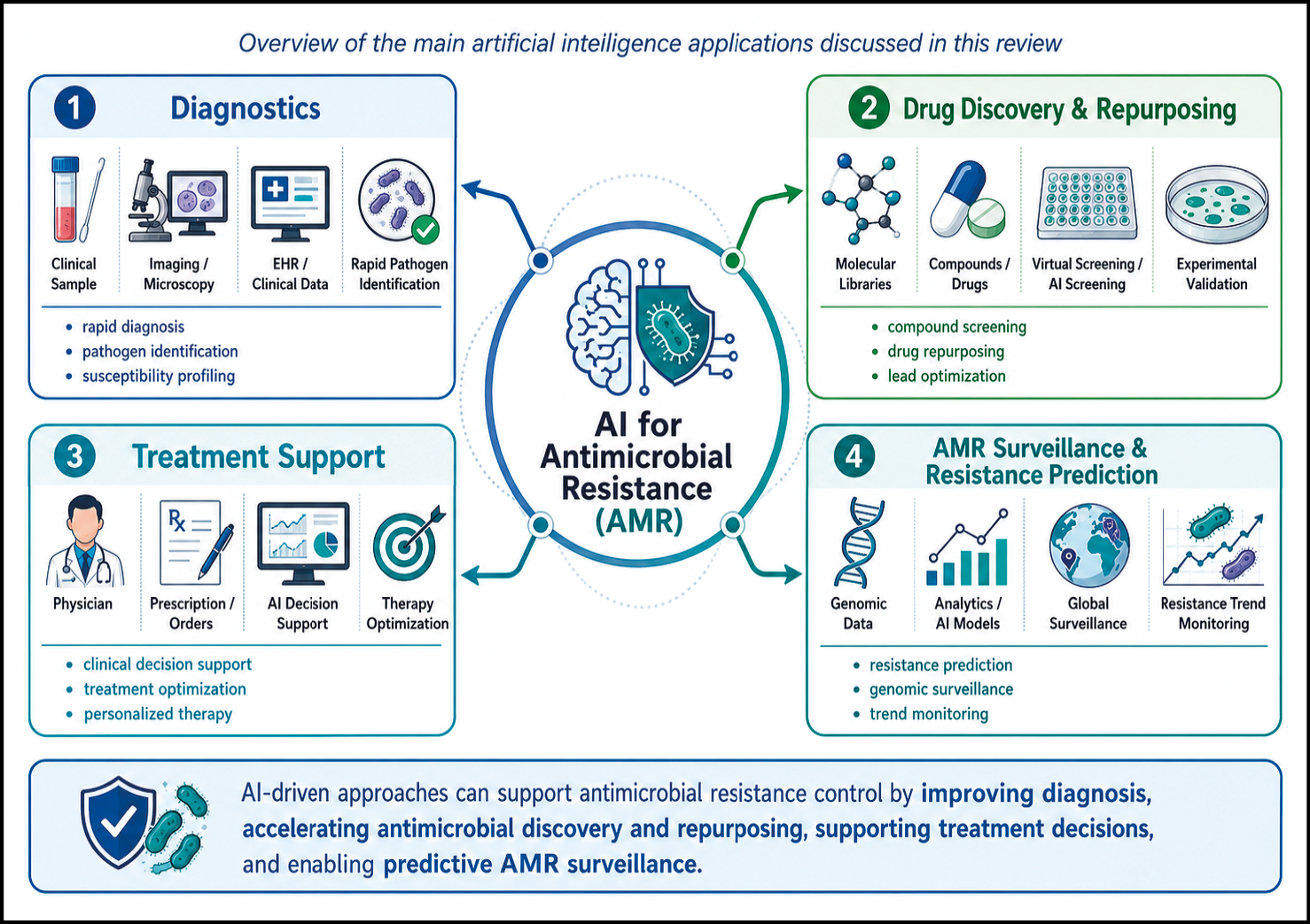
Figure 1 - AI-driven approaches combat antimicrobial resistance by improving diagnosis, guiding drug development, and enabling predictive AMR surveillance.
METHODS
This article is a narrative review, giving a broad overview and critical discussion of the current applications of artificial intelligence (AI) in antimicrobial resistance (AMR). A narrative review design was chosen because the purpose was to review a wide and multi-faceted rapidly evolving field, and not to answer a very specific clinical question or to perform a meta-analysis. A structured literature search was conducted to increase transparency and reproducibility on the PubMed, Scopus, Web of Science, and Google Scholar databases. Three major concepts were combined in the search strategy, these are antimicrobial resistance, artificial intelligence and clinical or translational applications. Search terms used were: “antimicrobial resistance,” “antibiotic resistance,” “AMR,” “artificial intelligence,” “machine learning,” “deep learning,” “neural network,” “drug discovery,” “drug repurposing,” “genomic surveillance”, “antimicrobial susceptibility testing,” “clinical decision support,” “phage therapy” and “antimicrobial peptides.”
Articles were considered if they were written in English language, covered bacterial AMR or infection disease management, and mentioned any form of AI, machine learning, deep learning, or predictive methods for AMR control. Studies were deemed relevant if they addressed antimicrobial discovery, drug repurposing, diagnostics, antimicrobial resistance prediction, clinical decision support, AMR surveillance, alternative therapeutic strategies, and ethical and implementation challenges. Articles that were not directly related to bacterial AMR, did not mention AI or computational methods, only discussed non-bacterial infections but not related to AMR, were duplicates, could not be translated into English, or were lacking in scientific details were excluded. The literature reviewed and analyzed was then grouped by theme corresponding to the key application areas of AI in AMR. The synthesis aimed at comparing AI approaches with regard to the following: data requirements, strengths, limitations, clinical relevance, interpretability, validation requirements, and readiness for clinical translation.
Mechanisms of AMR in Bacteria
AMR arises from a multifactorial process wherein genetic, biochemical, and structural adaptations within bacteria impair the ability of antimicrobial agents to effectively kill them [11]. There are five major mechanisms involved such as enzymatic inactivation of antibiotics, modification of the antimicrobial target, reduced membrane permeability, active drug efflux and horizontal gene transfer of resistance genes. In both Gram-positive and Gram-negative bacteria, efflux pumps are crucial in either actively pumping antimicrobial agents out of the cell or lowering the intracellular levels of drugs. These systems comprise large families of transporters including ATP-binding cassette, major facilitator, small multidrug resistance, multidrug and toxic compound extrusion, and resistance-nodulation-division transporters that have been linked to resistance to a number of antibiotic classes [12-15]. Target modification is another important resistance mechanism that can occur as a result of mutations or changes in the sequence of the bacterial target, in this case, a change in the sequence of topoisomerase IV, DNA gyrase, penicillin-binding proteins, or cell-wall precursors. These changes may lead to decreased binding of antibiotics and resistance to agents such as β-lactam, glycopeptides, macrolides, oxazolidinones, and fluoroquinolones [16, 17]. In Gram-negative bacteria, resistance can occur through reduced permeability, resulting from either a decrease in the number of porins or structural modifications. In addition, structural modification of the outer membrane may reduce susceptibility to last-resort antimicrobials such as colistin [18, 19]. Biofilm formation is another important factor that increases resistance through three major mechanisms: limiting antimicrobial penetration into bacterial cells, suppressing metabolic activity, and protecting bacteria from environmental stressors and the host immune system [20]. Plasmids and integrons further facilitate the rapid transfer of resistance genes among bacteria [21, 22]. These resistance determinants commonly work together, creating multidrug-resistant phenotypes that are hard to detect, manage, and monitor. This overview is relevant to the current review, as AI tools can integrate genomic, clinical, and epidemiological data to envisage resistance, uncover novel markers, and facilitate drug discovery (Figure 2).
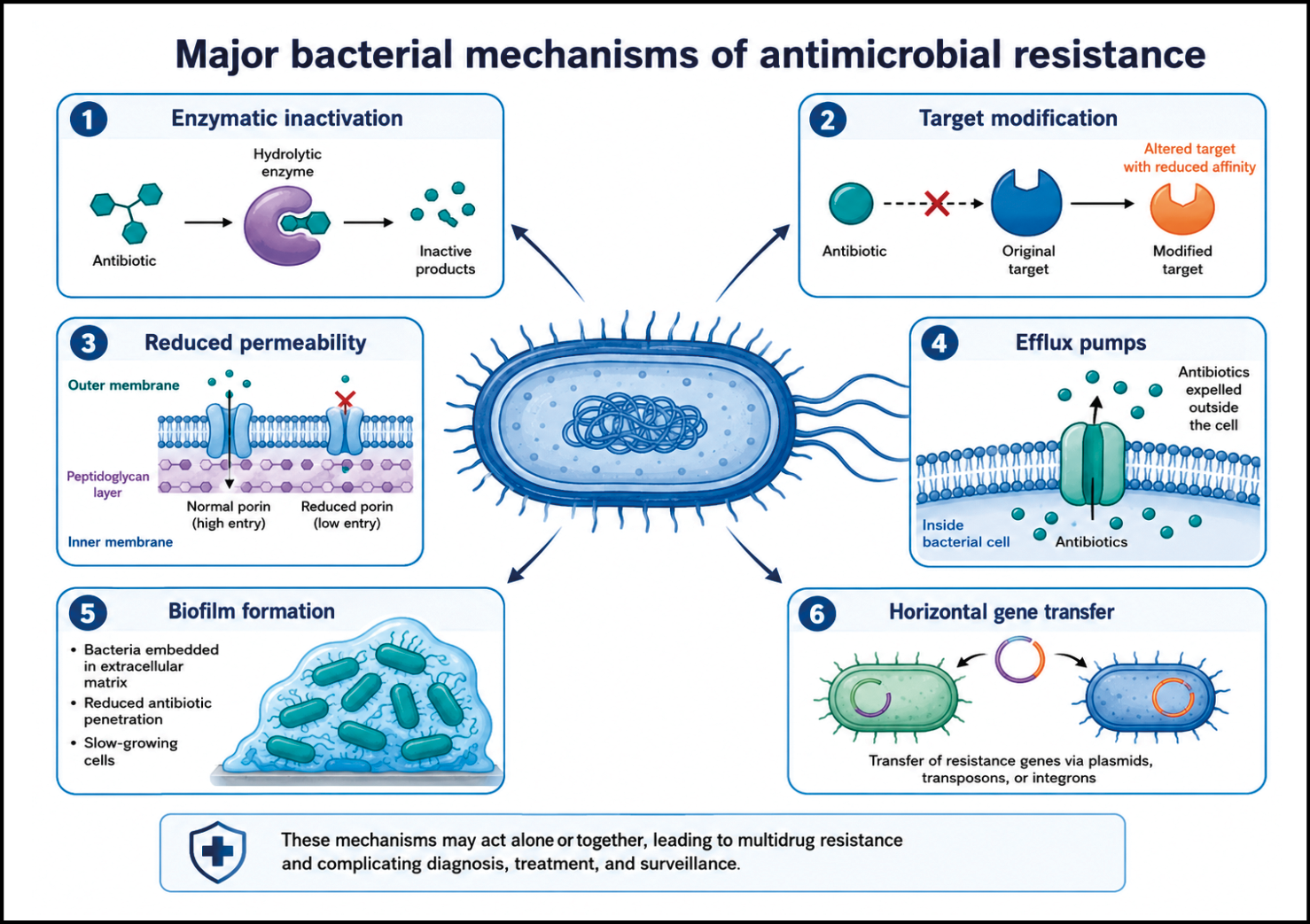
Figure 2 - The main strategies used by bacteria for antimicrobial resistance include enzyme-mediated inactivation, alteration of targets, reduced permeability, active efflux, formation of biofilms, and horizontal gene transfer. When operating individually or in combination, these strategies lead to multidrug-resistant organisms and are major impediments to diagnosis and treatment.
Conventional approaches to fight AMR
Traditional approaches to addressing AMR, such as antimicrobial stewardship, infection control measures, educational campaigns, and other public-health initiatives, remain essential [23]. These approaches can help reduce the misuse of antimicrobial drugs and control the spread of resistant microorganisms; however, their effectiveness is often limited by unequal access to resources and differences in healthcare systems [24]. AI may be beneficial in this context by supporting data-driven decision-making in diagnostics, drug discovery, antimicrobial prescribing, and AMR surveillance. For example, machine learning and deep learning models can accelerate compound screening and retrosynthesis prediction [25, 26].
Alternative therapies: pioneering strategies to combat AMR
AMR is a rapidly emerging global public health problem affecting human, animal, and environmental health under the One Health framework. Multidrug-resistant (MDR), extensively drug-resistant (XDR) and pandrug-resistant (PDR) strains of pathogens such as S. aureus, K. pneumoniae, A. baumannii, P. aeruginosa, and E. coli are becoming increasingly prevalent [27]. These drug-resistant pathogens have diminished the efficacy of many traditional antibiotics, including those considered last-resort agents, and pose a major challenge to healthcare, agriculture and veterinary services. This situation has encouraged investigation of alternative strategies such as phage therapy and AMPs, and have yielded positive outcomes. The use of bacteriophages to target and lyse antibiotic-resistant bacteria and leave beneficial bacteria untouched, known as phage therapy, has demonstrated success in treating infections such as S. aureus and Achromobacter spp in cystic fibrosis (CF) patients [28]. Phages have also proven to be effective in degradation of antibiotic-resistant biofilms [29]. Despite their promise, there are several challenges to address such as the narrow host range of phages, horizontal gene transfer, and complex interactions with the human immune system [30, 31]. New technologies such as CRISPR-Cas technology and Bacteriophage Recombineering of Electroporated DNA (BRED) have been used in optimizing phage therapy. In an effort to develop safe and effective phages for use in the treatment of diseases in the clinical environment, AI algorithms are currently used to make predictions on the specificity of phages as well as guide their genetic engineering [32]. AMPs are small oligopeptides with the range of 15-150 amino acid residues that exhibit broad spectrum antimicrobial activities. They have received much interest due to their capability to kill clinically resistant microorganisms such as P. aeruginosa, K. pneumoniae, MRSA and E. faecalis [33]. Models based on AI are being utilized extensively for the development of alternate antimicrobial approaches that include the prioritization of potential compounds with high activity, enhanced stability, and minimal toxicity levels [34, 35]. For AMPs, tools such as AMP-Designer, MoFormer, and HMAMP support peptide generation, toxicity prediction, and activity optimization [36-38]. In aptamer research, platforms such as DeepAptamer, AptaDiff, and AIoptamer can assist in binding-affinity prediction, de novo sequence generation, and stability optimization [39, 40]. AI may also support the design of targeted delivery systems, including aptamer-nanoparticle conjugates and RNA-based delivery platforms, by improving target specificity and predicted bioavailability [41]. However, these approaches still require experimental validation and clinical evaluation before routine use in AMR management (Figure 3).
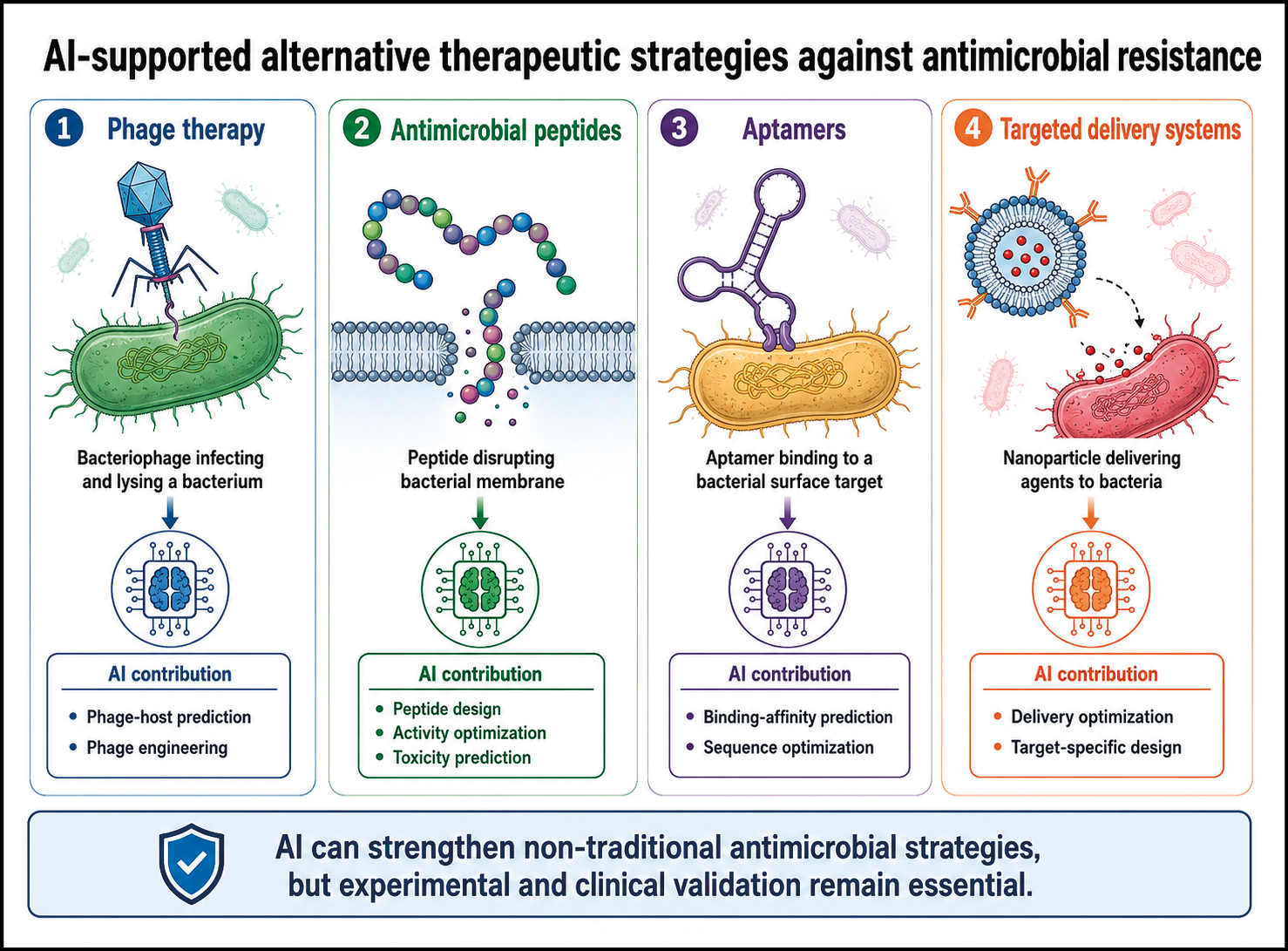
Figure 3 - AI-supported alternative therapeutic strategies against antimicrobial resistance. AI can support non-traditional antimicrobial approaches by predicting phage-host interactions, optimizing antimicrobial peptide sequences, improving aptamer binding, and enhancing targeted delivery-system design. These strategies may complement conventional antibiotics, although experimental and clinical validation remain essential.
AI in Antimicrobial Drug Discovery and Repurposing
The development of novel antibiotics has been slow, costly, and insufficient to meet the rising challenge posed by antimicrobial resistance. Traditional methods of drug discovery involve the creation of vast compound libraries based on known modes of action and followed by their extensive screening for activity and toxicity. According to the 2023 WHO antibacterial pipeline analysis, 16 new antibacterial agents had received regulatory approval by stringent regulatory authorities or WHO-listed authorities since July 2017; however, the overall level of innovation remains limited, and the current pipeline is still insufficient to address the growing burden of infections caused by multidrug-resistant pathogens [42]. Although some recently approved antibiotics have expanded treatment options, many are merely derivatives or combinations of existing antibiotic classes rather than genuinely novel modes of action. For example, vaborbactam is a serine β-lactamase inhibitor used in combination with meropenem to restore β-lactam activity against selected β-lactamase-producing Gram-negative bacteria. Therefore, vaborbactam should be described as an evolution within the established β-lactam/β-lactamase inhibitor strategy, rather than as a novel antibacterial mechanism [43]. In contrast, agents such as lefamulin are more appropriately discussed as examples of antibacterial innovation because they act through a distinct mechanism involving inhibition of bacterial protein synthesis at the peptidyl transferase center [44, 45]. This highlights the need for new approaches to accelerate the drug discovery process, especially for XDR pathogens. AI can support antibacterial drug discovery by accelerating compound screening, predicting antimicrobial activity, optimizing molecular structures, and prioritizing candidates with more favorable predicted safety profiles. This may include early in silico assessment of cytotoxicity, hemolytic activity, off-target effects, pharmacokinetic behavior, and absorption, distribution, metabolism, excretion, and toxicity (ADMET)-related risks before experimental validation. AI can also be used for high-throughput screening of chemical libraries to find lead compounds, assist in the design of biologics, and improve structure-activity relationships for newly developed drug candidates, such as antibacterial drugs. These include AI optimization of polymyxin derivatives with activity against carbapenem-resistant pathogens (CRPs) like SPR206, QPX9003/F365, and MRX-8 [46-48]. Drug repurposing through AI could provide yet another promising approach, considering that developing novel antimicrobials is a time-consuming and expensive process. With the use of chemical structures, bioactivities, genomics, transcriptomics, and pharmacological/clinical data, AI could find the molecules already used for some purpose but possessing antimicrobial activity. This approach can accelerate candidate prioritization, as repurposed drugs generally have well-established safety, pharmacokinetic, and manufacturing profiles. In terms of research related to AMR, AI-powered repurposing may help in identifying molecules that could inhibit bacteria, reverse the resistance to antibiotics, interfere with biofilm formation, or serve as synergists for current anti-microbial treatments. One such compound is halicin which, although investigated for another purpose, showed its effectiveness in inhibiting bacteria via the screening using deep-learning algorithm. Nevertheless, AI-generated repurposing hypotheses require microbiological validation, toxicity assessment, pharmacodynamic evaluation, and clinical testing before translation into treatment for complex infections [8, 9].
AI for Resistance Prediction and AMR Profiling
AI-based prediction models can support infectious disease monitoring and AMR profiling by analyzing epidemiological, genomic, clinical, and phenotypic data. Machine learning and deep learning approaches have been used to identify outbreak patterns, predict resistance phenotypes, and detect genetic markers associated with antimicrobial resistance [49]. Furthermore, AI-based predictive models are increasingly being used to anticipate the resistance characteristics of bacterial pathogens. Support vector machines (SVMs) are examples of supervised learning models that have been applied to predicting bacterial resistance using gene sequences and minimum inhibitory concentration (MIC) data in order to detect the AMR phenotype in bacteria such as E. coli, S. aureus, and P. aeruginosa. These models are capable of predicting resistance mechanisms through identifying certain gene clusters associated with antimicrobial resistance, which would help in customizing treatment and avoiding the spread of AMR pathogens. AI is increasingly applied to the investigation of pathogen-specific volatile organic compounds (VOCs) as biomarkers for infectious disease detection. VOCs appeared to offer a promising route to non-invasive diagnosis, obviating the need for traditional invasive sampling. Machine learning models are able to analyze the VOC data in order to distinguish pathogenic profiles [50]. Nevertheless, the use of AI for resistance profiling is not limited by mere prediction. Analyzing big datasets and finding resistance markers help scientists to learn more about genetic mechanisms behind the AMR phenomenon. Further developments are possible in the area of modeling by employing advanced methods like binary encoding and genetic algorithms which enhance their ability to predict and identify new resistance genes. Collectively, these approaches facilitate earlier detection of resistance patterns.
AI in clinical diagnostics
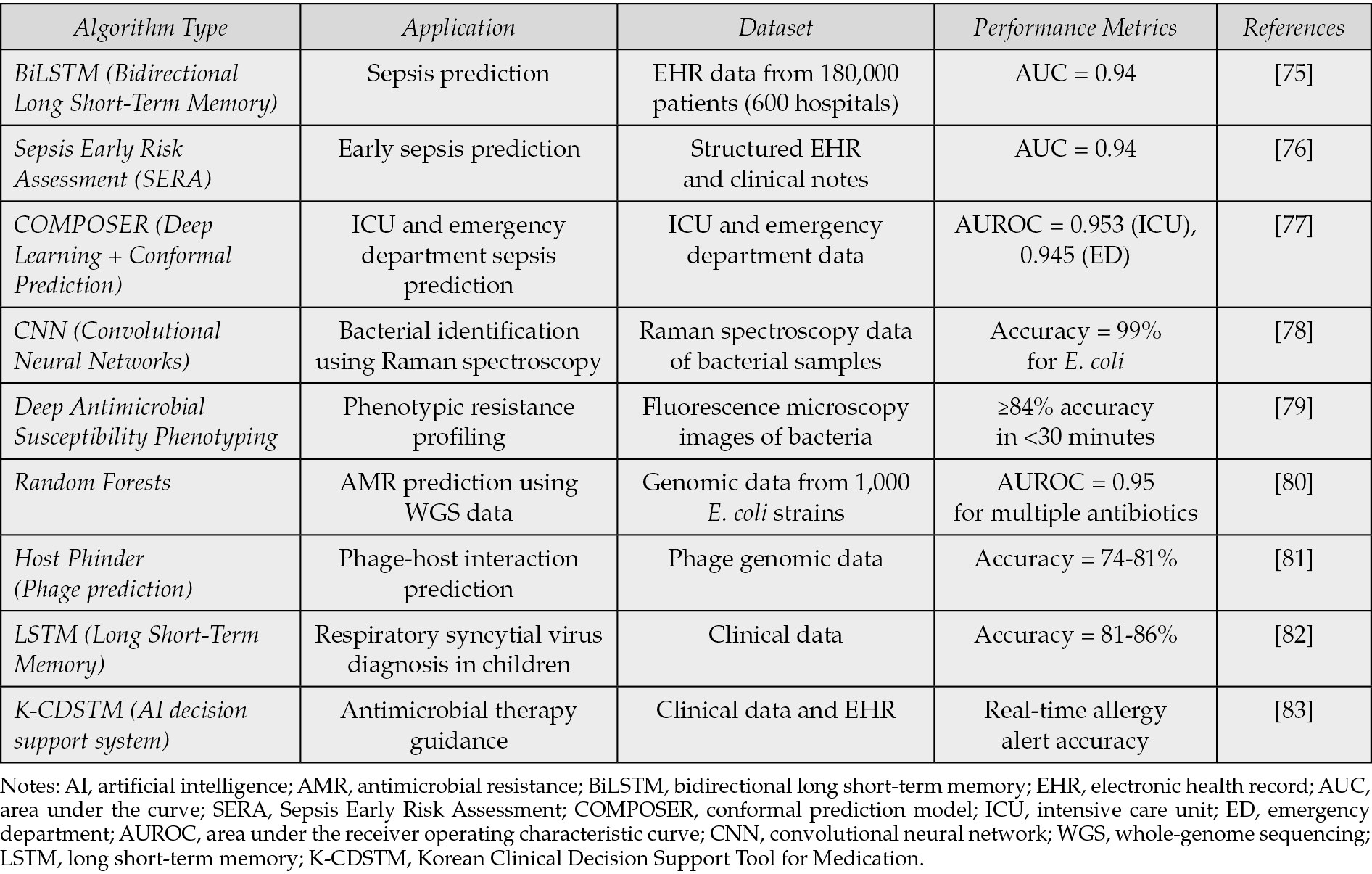
In infections where patients face the risk of death, such as bacterial sepsis, meningitis, and toxic shock syndrome, fast and accurate diagnosis is key to achieving good results for the patient. Although traditional diagnostic techniques including culture-based antimicrobial susceptibility testing (AST), polymerase chain reaction (PCR), 16S ribosomal RNA (rRNA) sequencing, and matrix-assisted laser desorption/ionization time-of-flight mass spectrometry (MALDI-TOF MS) remain the test of time as the gold standard, they come with their own drawbacks, including prolonged turnaround times, culture dependence, and variable sensitivity [51]. One of the solutions that are becoming more popular for dealing with this challenge is AI-based technologies, encompassing automation of processes, early detection and diagnosis. For example, models such as bidirectional long short-term memory (BiLSTM) networks prioritize recent EHR data and utilize attention-weighting mechanisms to evaluate the relative significance of clinical variables. When evaluated on 180,000 records from 600 hospitals, one such model achieved an area under the curve (AUC) of 0.94 [52]. Sepsis Early Risk Assessment (SERA) is another case where the structured EHR information and unstructured clinical notes are used together, employing the latent Dirichlet allocation-based NLP technique. SERA can predict sepsis with a maximum of 0.94 accuracy over 12-48 hours [11]. Also, COMPOSER is a deep learning method that employs conformal prediction along with the feedforward neural network, which provides a more generalized method for out-of-distribution input detection. This system demonstrated an area under the receiver operating characteristic (AUROC) of 0.953 in the intensive care units (ICUs) and 0.945 in the emergency department, along with a 17% reduction in in-hospital mortality rate [53]. With regard to pathogen identification, machine learning models that use Raman spectroscopy combined with convolutional neural networks (CNNs) have achieved up to 99% accuracy in classifying E. coli at the single-cell level [54]. In addition, the identification of bloodstream infection pathogens in 3D Quantitative Phase Imaging using CNNs have recorded an accuracy of 82.5% for 19 different species. AI has been used together with whole-genome sequencing (WGS) for predicting AMR through identifying single-nucleotide polymorphisms (SNPs) responsible for antibiotic resistance. For example, random forest models based on data from over 1,000 E. coli strains have reached AUROCs of 0.95 for several antibiotics [55]. Phenotypic methods, including Deep Antimicrobial Susceptibility Phenotyping, use fluorescence microscopy along with CNNs to differentiate between resistant and susceptible bacteria based on structural alterations. This method attains ≥84% accuracy in 30 minutes but still needs culture-based pre-processing before proceeding further [56]. AI-driven MALDI-TOF MS, with the help of the DRIAMS database that includes more than 300,000 mass spectra with 768,000 AMR classifications, provides resistance predictions for 803 different microorganisms. Machine learning models, including LightGBM and multi-layer perceptrons, built based on those datasets can predict resistance to MRSA and ciprofloxacin-resistant E. coli with AUROCs of 0.80 and 0.74, respectively [57]. During the retrospective clinical reviews, AI-driven AMR models would change antibiotic choice in 9 out of 63 cases with an 89% agreement with laboratory results. Despite these innovations, however, several challenges remain. These include data standardization, linguistic variability in clinical records, population bias, and the need for pathogen-antibiotic-specific algorithms [11]. AI-based diagnostic models were widely explored during the coronavirus disease 2019 (COVID-19) pandemic, including applications in reverse transcription PCR (RT-PCR) signal interpretation, blood-profile classification, variant detection, proteomic and metabolic analysis, and imaging-based diagnosis [58-63]. Although COVID-19 is not a bacterial AMR condition, these examples demonstrate how AI can support rapid diagnostic workflows, automated pattern recognition, and clinical triage during infectious disease emergencies.
Regarding mycobacterial infections caused by M. tuberculosis and atypical mycobacteria, these infections pose a massive challenge in terms of public health, accounting for about 10 million cases reported in 2018, mostly in immunocompromised and malnourished people. It becomes hard to diagnose these infections due to the presence of small morphology in the bacteria, which prevents the use of normal optical microscopy and even hematoxylin and eosin (H&E) staining for its identification [64]. Although some specialized stains, like Ziehl-Neelsen and Auramine O, are more sensitive, manual acid-fast bacilli (AFB) detection is a lengthy process (15-20 minutes per slide) and is both expensive and inaccurate due to low numbers of AFB [65]. AI-based algorithms, such as CNNs, are also being developed to achieve automated AFB detection in cytological and histological samples. The use of CNNs appears to be highly beneficial for improving AFB detection using digitized images, especially those obtained from sputum smears and lung biopsies. In particular, the application of CNNs with improved methods of pixel segmentation and patch processing of whole-slide images (WSIs) has been found to be extremely effective in classification performance, which makes it possible to avoid further review of negatives and reduces the burden of diagnosis. According to the study conducted by Kuok et al., the model based on a Faster R-CNN was 86% successful in detecting AFB in the smear images, while SVMs were less effective [66]. The CNN based active learning model attained F1 scores of 99.03% and 98.75% for positive and negative AFB, respectively, with accuracy of 99.04% and 98.48% [66]. A simplified workflow for AI-assisted infectious disease diagnosis and AMR prediction is shown in Figure 4.
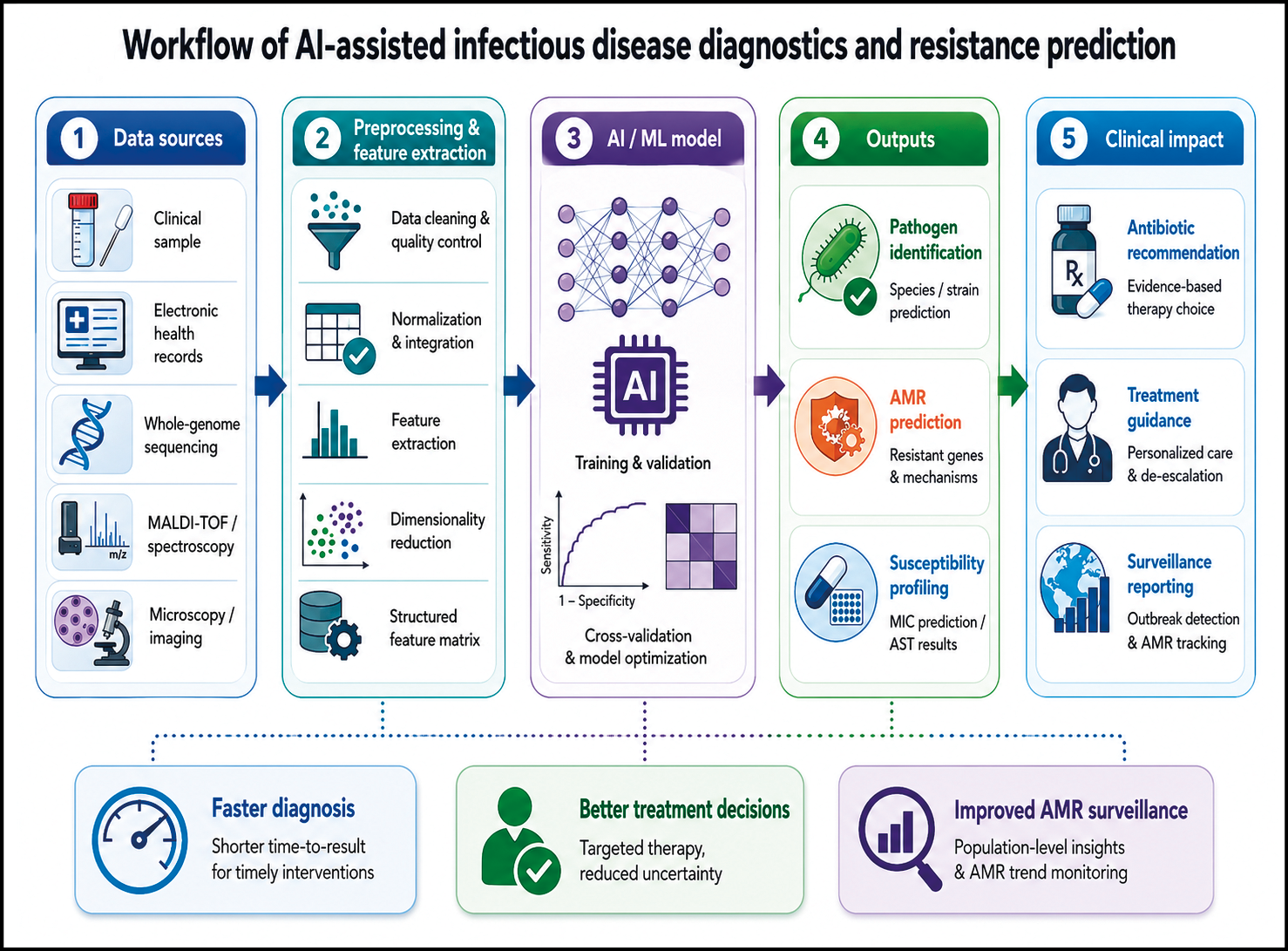
Figure 4 - Workflow of AI-enabled diagnosis and prediction of infection and antibiotic resistance. AI-driven diagnosis systems utilize diverse data types such as clinical specimen data, EHRs, whole genome sequence data, MALDI-TOF/spectrometry data, and microscopic imaging data. Following preprocessing, machine learning models are used to support pathogen identification, AMR prediction, treatment guidance, and surveillance reporting.
AI in Clinical Decision Support and Treatment Optimization
The urgency of improving AMR treatment strategies was reinforced at the 79th United Nations General Assembly High-Level Meeting on AMR in 2024, where world leaders approved a political declaration committing to coordinated One Health action and to reducing the estimated 4.95 million annual human deaths associated with bacterial AMR by 10% by 2030 [67, 68]. In bacterial infection management, AI can support therapeutic decision-making by integrating pathogen data, host factors, antimicrobial susceptibility results, and clinical history. These models may help identify therapeutic targets, predict resistance, optimize antimicrobial selection, and support vaccine or phage-based strategies. For example, machine learning has been applied to omics data from P. aeruginosa to distinguish pathogenic from non-pathogenic strains and identify potential drug targets. In vaccine research, reverse vaccinology and deep learning can assist antigen selection and immune-response prediction, while phage-host prediction tools such as Host Phinder may support the selection of candidate phages for resistant infections [69-71]. In clinical settings, AI and ML models may also support infectious disease diagnosis, risk prediction, and antimicrobial decision support. ML models have been used to support the diagnosis of respiratory syncytial virus (RSV) and pertussis infections in children, as well as risk prediction for MRSA pneumonia and extended-spectrum β-lactamase (ESBL) bacteremia [72]. The use of AI in systems such as the Korean Clinical Decision Support Tool for Medication (K-CDSTM) makes it possible for real-time antimicrobial allergy warnings, whereas the adoption of an ontology-based decision-making system improves the interaction between clinicians and patients [73]. Big data predictive analysis has been found to be more effective compared to conventional approaches, with shortened antimicrobial therapy time and reduced hospital expenses. In fact, the AI decision-making system cut down medical costs by up to $84,000 in just three months in a particular case-control experiment [74]. The important uses of AI for treatment of bacterial infections are highlighted in Figure 5 and the algorithms along with their performance metrics are shown in Table 1. Nevertheless, there are certain issues that must be addressed before AI can be incorporated in the practice of medicine, which are described in the next section.
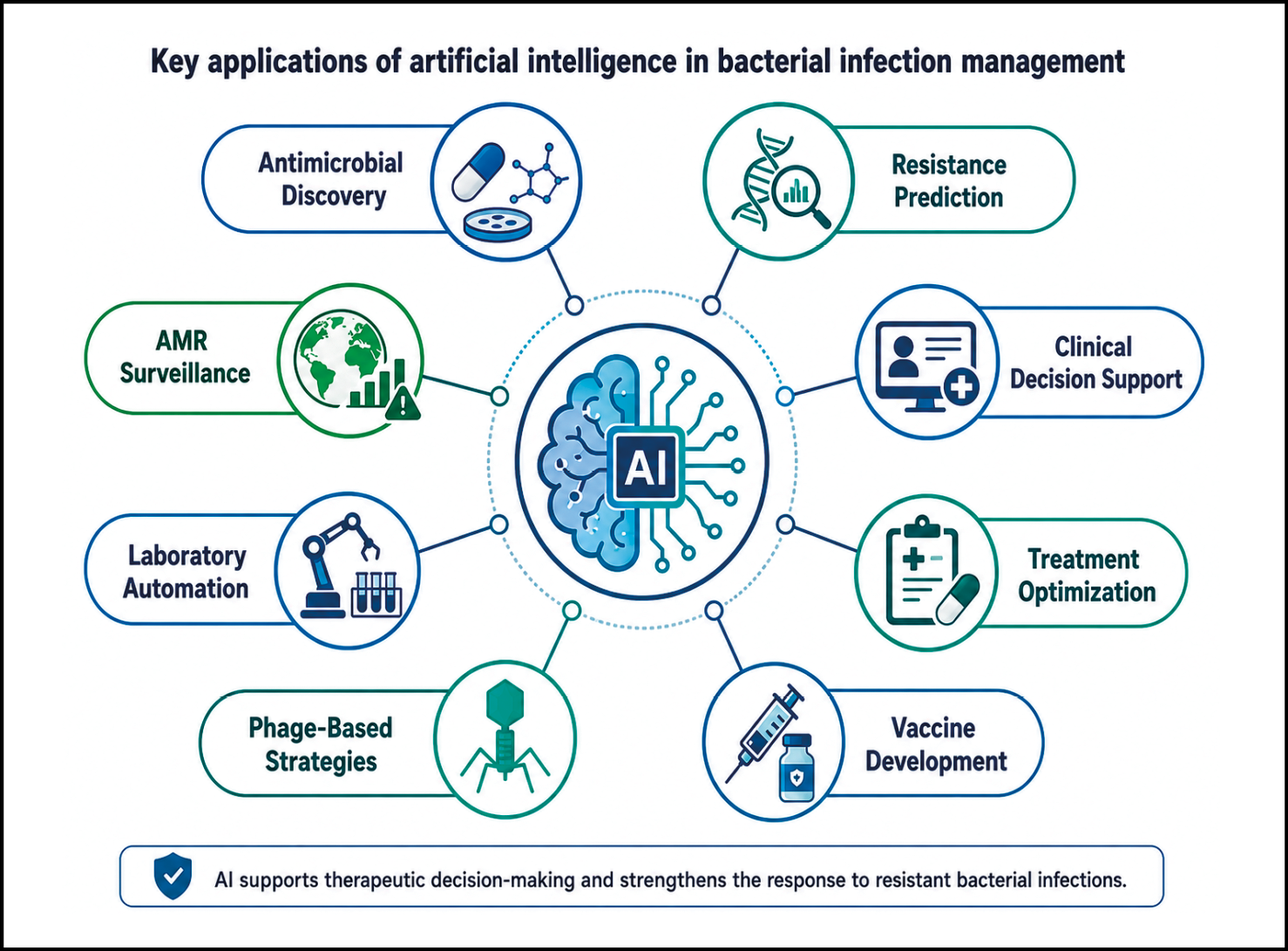
Figure 5 - Applications of artificial intelligence in the management of bacterial infections. There are various uses of AI in bacterial infection management such as antimicrobial drug discovery, antimicrobial resistance prediction, decision-making support for clinicians, optimizing the use of antimicrobials, vaccine discovery, phage therapy, automation of laboratory processes, and antimicrobial resistance surveillance.
Table 1 - AI algorithms in infectious disease and AMR treatment.
Challenges and Future Directions
Despite all the promising advantages that AI may bring in the fight against bacterial diseases, there are several essential factors impeding its adoption. A significant challenge concerns data: the collection and exchange of patient information are often constrained by privacy regulations and data heterogeneity [84]. In addition, numerous models based on deep learning algorithms are affected by the “black-box” dilemma, where it is difficult to explain the AI prediction processes [85]. Moreover, the majority of AI-based healthcare studies are still conducted outside hospital settings and remain largely non-clinical [86]. The unpredictability and genetic diversity of the pathogens, as well as their genetic drift, increase the challenge of predicting bacterial behavior and resistance accurately. In addition, developing sophisticated AI technologies requires a wide range of expertise from various scientific domains, such as microbiology, biochemistry, genetics, mathematics, and computer science, which is an enormous obstacle for researchers with limited funding opportunities. Finally, the deployment of AI-driven technologies in resource-poor settings poses unique regulatory and ethical challenges. Furthermore, the lack of established standards raises concerns about consistency and fairness when applying machine learning across diverse healthcare contexts. Algorithmic bias poses an additional threat, as models trained on unrepresentative datasets may inadvertently discriminate against specific populations. Despite these limitations, AI can enhance future AMR research and applications if used in a responsible way. Future priorities include external validation of resistance-prediction models, development of explainable clinical decision-support systems, and AI-driven antimicrobial discovery and combination optimization. Laboratory automation and integrated One Health surveillance also require dedicated attention. Greater attention should be paid to prospective validation, transparency in reporting, representative databases, regulation, and application in high- and low-resource settings. This is in line with a recent study, which noted the potential of big data in building predictive models for neglected tropical diseases and how such data prediction should be aligned with evidence-based medicine decision-making [87].
Data Ethics, Transparency, and Reproducibility in AI-Based Biomedical Research
The incorporation of AI-based technology in biomedical research for developing solutions to combat AMR comes with several unique ethical considerations. The ethical issues related to AI application in biomedical research mainly concern issues of privacy, informed consent, and potential biases. Privacy is one of the major ethical concerns associated with using AI technology in healthcare because patient data can be used to train AI algorithms, and such actions would be subject to strict regulations, including the Health Insurance Portability and Accountability Act (HIPAA) in the United States and the General Data Protection Regulation (GDPR) in the European Union. Furthermore, AI models have to be trained on diverse and representative data sets to prevent biased predictions that can adversely affect the health of disadvantaged populations, thereby increasing health disparities. Another important problem in AI applications within biomedicine is that of transparency. Most AI models, particularly those involving deep learning techniques, are considered “black boxes,” which implies the difficulty involved in understanding how they work. To gain the trust of both clinicians and patients, AI-based technologies need to be designed in such a way that they are clear in their functions and decision-making processes. Another basic concept related to science is reproducibility, which can help enhance the validity of AI technologies in medicine. Regardless of the dataset or clinical context used, the process must be reproducible. For this purpose, the methods, dataset (if possible), and algorithmic approaches used for designing AI models should be available. Otherwise, it will be extremely difficult to apply AI broadly for medical purposes since the ability to verify the effectiveness and credibility of AI-based solutions in different contexts is crucial. In summary, when applying AI for AMR control, it is necessary to consider such issues as data ethics, transparency, and reproducibility.
Conclusions
AI offers important opportunities to strengthen AMR control by supporting antimicrobial discovery, drug repurposing, resistance prediction, diagnostics, treatment optimization, and surveillance. Its main value lies in integrating complex genomic, phenotypic, clinical, and epidemiological data to generate actionable insights for research, laboratory practice, and clinical decision-making. However, successful implementation requires high-quality datasets, external validation, transparent and interpretable models, ethical data governance, regulatory oversight, and equitable access across healthcare settings. AI should therefore be viewed as a complementary tool that can enhance, but not replace, antimicrobial stewardship, infection prevention, laboratory diagnostics, and coordinated public-health action.
Funding
None.
Acknowledgment
AI-based tools were utilized to optimize figures design and clarity.
Conflict of interest
The authors declare no conflict of interest, financial or otherwise.
Availability of data and materials
All the data and supporting information are provided within the article.
REFERENCES
[1] Lesosky M, McGeer A, Simor A, Green K, Low DE, Raboud J. Effect of patterns of transferring patients among healthcare institutions on rates of nosocomial methicillin-resistant Staphylococcus aureus transmission: a Monte Carlo simulation. Infect Control Hosp Epidemiol. 2011; 32(2): 136-147. doi:10.1086/657945.
[2] Cherkaoui A, Renzi G, Charretier Y, Blanc DS, Vuilleumier N, Schrenzel J. Automated incubation and digital image analysis of chromogenic media using Copan WASPLab enables rapid detection of vancomycin-resistant Enterococcus. Front Cell Infect Microbiol. 2019; 9: 379. doi:10.3389/fcimb.2019.00379.
[3] AlMatar M, Var I, Kayar B, Köksal F. Differential expression of resistant and efflux pump genes in MDR-TB isolates. Endocr Metab Immune Disord Drug Targets. 2020; 20(2): 271-278. doi:10.2174/1871530319666191009153834.
[4] Tiseo G , Stefani S, Fasano FR, Falcone M. The burden of infections caused by Metallo-Beta-LactamaseProducing Enterobacterales in Italy: epidemiology, outcomes, and management. Infez Med. 2025; 3: 249-260. doi: 10.53854/liim-3303-1
[5] Asghari OM, Abbasi A, Asgharzadeh M, et al. Antibiotic therapy for pan-drug-resistant infections. Infez Med. 2022; 30(4): 525-531
[6] Sati H, Carrara E, Savoldi A, et al. The WHO Bacterial Priority Pathogens List 2024: a prioritisation study to guide research, development, and public health strategies against antimicrobial resistance. Lancet Infect Dis. 2025; 25(9): 1033-1043. doi:10.1016/S1473-3099(25)00118-5.
[7] Balgouthi K, AlMatar M, Saghrouchni H, Albarri O, Var I. Mutations in Rv0678, Rv2535c, and Rv1979c confer resistance to bedaquiline in clinical isolates of Mycobacterium tuberculosis. Curr Mol Pharmacol. 2024; 17(1): e18761429314641. doi:10.2174/0118761429314641240815080447.
[8] Singh A. Artificial intelligence for drug repurposing against infectious diseases. Artif Intell Chem. 2024; 2(2): 100071. doi:10.1016/j.aichem.2024.100071.
[9] Wan Z, Sun X, Li Y, et al. Applications of artificial intelligence in drug repurposing. Adv Sci. 2025; 12(14): 2411325. doi:10.1002/advs.202411325.
[10] Zavaleta-Monestel E, Rojas-Chinchilla C, Campos-Hernández J, Martínez-Vargas E. Utility of artificial intelligence in antibiotic development: accelerating discovery in the age of resistance. Cureus. 2025; 17(1). doi:10.7759/cureus.78296.
[11] Arnold A, McLellan S, Stokes JM. How AI can help us beat AMR. npj Antimicrobials Resist. 2025; 3(1): 18. doi:10.1038/s44259-025-00085-4.
[12] Huang L, Wu C, Gao H, et al. Bacterial multidrug efflux pumps at the frontline of antimicrobial resistance: an overview. Antibiotics. 2022; 11(4): 520. doi:10.3390/antibiotics11040520.
[13] Chetri S. The culmination of multidrug-resistant efflux pumps vs. meager antibiotic arsenal era: urgent need for an improved new generation of EPIs. Front Microbiol. 2023; 14: 1149418. doi:10.3389/fmicb.2023.1149418.
[14] AlMatar M, Makky EA, AlMandeal H, et al. Does the development of vaccines advance solutions for tuberculosis? Curr Mol Pharmacol. 2019; 12(2): 83-90. doi:10.2174/1874467212666181126151948.
[15] Albarri O, AlMatar M, Öcal MM, Köksal F. Overexpression of efflux pumps AcrAB and OqxAB contributes to ciprofloxacin resistance in clinical isolates of K. pneumoniae. Curr Protein Pept Sci. 2022; 23(5): 356-364. doi:10.2174/1389203723666220630162920.
[16] Zack KM, Sorenson T, Joshi SG. Types and mechanisms of efflux pump systems and the potential of efflux pump inhibitors in the restoration of antimicrobial susceptibility, with a special reference to Acinetobacter baumannii. Pathogens. 2024; 13(3): 197. doi:10.3390/pathogens13030197.
[17] AlMatar M, Albarri O, Makky EA, Köksal F. Efflux pump inhibitors: new updates. Pharmacol Rep. 2021; 73(1): 1-16. doi:10.1007/s43440-020-00160-9.
[18] Beceiro A, Llobet E, Aranda J, et al. Phosphoethanolamine modification of lipid A in colistin-resistant variants of Acinetobacter baumannii mediated by the pmrAB two-component regulatory system. Antimicrob Agents Chemother. 2011; 55(7): 3370-3379. doi:10.1128/AAC.00211-11.
[19] Tsai YK, Fung CP, Lin JC, et al. Klebsiella pneumoniae outer membrane porins OmpK35 and OmpK36 play roles in both antimicrobial resistance and virulence. Antimicrob Agents Chemother. 2011; 55(4): 1485-1493. doi:10.1128/AAC.01314-10.
[20] Hadadi-Fishani M, Khaledi A, Fatemi-Nasab ZS Correlation between biofilm formation and antibiotic resistance in Pseudomonas aeruginosa: a meta-analysis. Infez Med. 2020: 28(1): 47-54
[21] Long SW, Olsen RJ, Mehta SC, et al. PBP2a mutations causing high-level ceftaroline resistance in clinical methicillin-resistant Staphylococcus aureus isolates. Antimicrob Agents Chemother. 2014; 58(11): 6668-6674. doi:10.1128/AAC.03319-14.
[22] Sinha S, Upadhyay LSB. Understanding antimicrobial resistance (AMR) mechanisms and advancements in AMR diagnostics. Diagn Microbiol Infect Dis. 2025; 116949. doi:10.1016/j.diagmicrobio.2024.116949.
[23] Mezzadri L, Bonfanti P. When Faster Diagnosis Is Not Enough: Bringing Diagnostic Stewardship into Antimicrobial Stewardship. Infez Med. 2026; 34(2): 123-125.
[24] Mohammed AM, Oleiwi JK, Osman AF, et al. Enhancing antimicrobial resistance strategies: leveraging artificial intelligence for improved outcomes. S Afr J Chem Eng. 2025; 51(1): 272-281.
[25] Zhang K, Mann V, Venkatasubramanian V. G-MATT: Single-step retrosynthesis prediction using molecular grammar tree transformer. AIChE J. 2024; 70(1): e18244. doi:10.1002/aic.18244.
[26] Mann V, Viswanath S, Vaidyaraman S, Balakrishnan J, Venkatasubramanian V. SUSIE: Pharmaceutical CMC ontology-based information extraction for drug development using machine learning. Comput Chem Eng. 2023; 179: 108446. doi:10.1016/j.compchemeng.2023.108446.
[27] Hu F, Wang M, Zhu D, Wang F. CHINET efforts to control antimicrobial resistance in China. J Glob Antimicrob Resist. 2020; 21: 76-77. doi:10.1016/j.jgar.2020.03.007.
[28] Cesta N, Di Luca M, Corbellino M, Tavio M, Galli M, Andreoni M. Bacteriophage therapy: an overview and the position of the Italian Society of Infectious and Tropical Diseases. Infez Med. 2020; 28(3): 322-331.
[29] Uyttebroek S, Chen B, Onsea J, et al. Safety and efficacy of phage therapy in difficult-to-treat infections: a systematic review. Lancet Infect Dis. 2022; 22(8): e208-e220. doi:10.1016/S1473-3099(21)00612-5.
[30] Strathdee SA, Hatfull GF, Mutalik VK, Schooley RT. Phage therapy: From biological mechanisms to future directions. Cell. 2023; 186(1): 17-31. doi:10.1016/j.cell.2022.11.017.
[31] Liu GY, Yu D, Fan MM, et al. Antimicrobial resistance crisis: could artificial intelligence be the solution? Mil Med Res. 2024; 11(1): 7. doi:10.1186/s40779-024-00510-1.
[32] Wang W, Ren J, Tang K, et al. A network-based integrated framework for predicting virus-prokaryote interactions. NAR Genom Bioinform. 2020; 2(2): lqaa044. doi:10.1093/nargab/lqaa044.
[33] Wang J, Zeng F, Chen X, et al. Engineering of antimicrobial peptide Brevinin-1pl: arginine, lysine, and histidine substitutions enhance antimicrobial-anticancer efficacy with reduced cytotoxicity. Front Chem. 2025; 13: 1579097. doi:10.3389/fchem.2025.1579097.
[34] Afrasiabi S, Pourhajibagher M, Raoofian R, Tabarzad M, Bahador A. Therapeutic applications of nucleic acid aptamers in microbial infections. J Biomed Sci. 2020; 27(1): 6. doi:10.1186/s12929-020-0615-5.
[35] Singha B, Singh V, Soni V. Alternative therapeutics to control antimicrobial resistance: a general perspective. Front Drug Discov. 2024; 4: 1385460. doi:10.3389/fddsv.2024.1385460.
[36] Nobori H, Fukao K, Kuroda T, et al. Efficacy of ensitrelvir against SARS-CoV-2 in a delayed-treatment mouse model. J Antimicrob Chemother. 2022; 77(11): 2984-2992. doi:10.1093/jac/dkac243.
[37] Zhao S, Zhao H, Zhao L, et al. Unraveling the genetic architecture of congenital vertebral malformation with reference to the developing spine. Nat Commun. 2024; 15(1): 1125. doi:10.1038/s41467-024-45442-5.
[38] Wang L, Li Y, Fu X, et al. Hmamp: Hypervolume-driven multi-objective antimicrobial peptides design. arXiv. 2024. doi:10.1021/acs.jmedchem.4c03073.
[39] Jesky RG, Lo LH, Siu RH, Tanner JA. Designing the future of biosensing: advances in aptamer discovery, computational modeling, and diagnostic applications. Biosensors. 2025; 15(10): 637. doi:10.3390/bios15100637.
[40] Bai W, Wells ML, Lai WS, et al. A post-transcriptional regulon controlled by TtpA, the single tristetraprolin family member expressed in Dictyostelium discoideum. Nucleic Acids Res. 2021; 49(20): 11920-11939. doi:10.1093/nar/gkab983.
[41] Liu Y, Liu X, Wang X, Jiang H. AI-empowered electrochemical sensors for biomedical applications: technological advances and future challenges. Biosensors. 2025; 15(8): 487. doi:10.3390/bios15080487.
[42] World Health Organization. 2023 Antibacterial agents in clinical and preclinical development: an overview and analysis. Geneva: World Health Organization. 2024.
[43] Bhowmick T, Weinstein MP. Microbiology of meropenem-vaborbactam: a novel carbapenem beta-lactamase inhibitor combination for carbapenem-resistant Enterobacterales infections. Infect Dis Ther. 2020; 9: 757-767. doi:10.1007/s40121-020-00350-1
[44] Ranjbar R, Alam M. Antimicrobial Resistance Collaborators. Global burden of bacterial antimicrobial resistance in 2019: a systematic analysis. Evid Based Nurs. 2023; ebnurs-2022-103540. doi: 10.1136/ebnurs-2022-103540 2023.
[45] World Health Organization. A financial model for an impact investment fund for the development of antibacterial treatments and diagnostics: a user guide. Geneva: WHO; 2020.
[46] Nelson RG, Rosowsky A. Dicyclic and tricyclic diaminopyrimidine derivatives as potent inhibitors of Cryptosporidium parvum dihydrofolate reductase: structure-activity and structure-selectivity correlations. Antimicrob Agents Chemother. 2002; 46(3): 940-948. doi:10.1128/AAC.46.3.940-948.
[47] Roberts KD, Zhu Y, Azad MA, et al. A synthetic lipopeptide targeting top-priority multidrug-resistant Gram-negative pathogens. Nat Commun. 2022; 13(1): 1625. doi:10.1038/s41467-022-28735-4.
[48] Lenhard JR, Bulman ZP, Tsuji BT, Kaye KS. Shifting gears: the future of polymyxin antibiotics. Antibiotics. 2019; 8(2): 42. doi:10.3390/antibiotics8020042.
[49] Eysenbach G. The role of ChatGPT, generative language models, and artificial intelligence in medical education: a conversation with ChatGPT and a call for papers. JMIR Med Educ. 2023; 9(1): e46885. doi:10.2196/46885.
[50] Amann A, de Lacy Costello B, Miekisch W, et al. The human volatilome: volatile organic compounds (VOCs) in exhaled breath, skin emanations, urine, feces and saliva. J Breath Res. 2014; 8(3): 034001. doi:10.1088/1752-7155/8/3/034001.
[51] Feucherolles M, Nennig M, Becker SL, et al. Combination of MALDI-TOF mass spectrometry and machine learning for rapid antimicrobial resistance screening: the case of Campylobacter spp. Front Microbiol. 2022; 12: 804484.
[52] Alsulimani A, Akhter N, Jameela F, et al. The impact of artificial intelligence on microbial diagnosis. Microorganisms. 2024; 12(6): 1051.
[53] Shashikumar SP, Wardi G, Malhotra A, Nemati S. Artificial intelligence sepsis prediction algorithm learns to say “I don’t know”. npj Digit Med. 2021; 4(1): 134. doi:10.1038/s41746-021-00458-0.
[54] Kim G, Ahn D, Kang M, et al. Rapid species identification of pathogenic bacteria from a minute quantity exploiting three-dimensional quantitative phase imaging and artificial neural network. Light Sci Appl. 2022; 11(1): 190. doi:10.1038/s41377-022-00837-4.
[55] Ren Y, Chakraborty T, Doijad S, et al. Prediction of antimicrobial resistance based on whole-genome sequencing and machine learning. Bioinformatics. 2022; 38(2): 325-331. doi:10.1093/bioinformatics/btab627.
[56] Zagajewski A, Turner P, Feehily C, et al. Deep learning and single-cell phenotyping for rapid antimicrobial susceptibility detection in Escherichia coli. Commun Biol. 2023; 6(1): 1164. doi:10.1038/s42003-023-05086-4.
[57] Weis C, Cuénod A, Rieck B, et al. Direct antimicrobial resistance prediction from clinical MALDI-TOF mass spectra using machine learning.. Nat Med 2022; 28(1): 164-174. doi:10.1038/s41591-021-01681-5.
[58] Chiu HYR, Hwang CK, Chen SY, et al. Machine learning for emerging infectious disease field responses. Sci Rep. 2022; 12(1): 328. doi:10.1038/s41598-022-06406-9.
[59] Lee Y, Kim YS, Lee DI, et al. The application of a deep learning system developed to reduce the time for RT-PCR in COVID-19 detection. Sci Rep. 2022; 12(1): 1234. doi:10.1038/s41598-022-05069-2.
[60] Cabrera Alvargonzález J, Larrañaga Janeiro A, Pérez Castro S, et al. Proof of concept of the potential of a machine learning algorithm to extract new information from conventional SARS-CoV-2 rRT-PCR results. Sci Rep. 2023; 13(1): 7786. doi:10.1038/s41598-023-34882-6.
[61] Beduk D, de Oliveira Filho JI, Beduk T, et al. “All In One” SARS-CoV-2 variant recognition platform: machine learning-enabled point of care diagnostics. Biosens Bioelectron X. 2022; 10: 100105.
[62] Huang C, Wang Y, Li X, et al. Clinical features of patients infected with 2019 novel coronavirus in Wuhan, China. Lancet. 2020; 395(10223): 497-506. doi:10.1016/S0140-6736(20)30183-5.
[63] Wang J, Yang X, Zhou B, et al. Review of machine learning in lung ultrasound in COVID-19 pandemic. J Imaging. 2022; 8(3): 65. doi:10.3390/jimaging8030065.
[64] Ibrahim AU, Guler E, Guvenir M, et al. Automated detection of Mycobacterium tuberculosis using transfer learning. J Infect Dev Ctries. 2021; 15(05): 678-685. doi:10.3855/jidc.14405.
[65] Yang M, Nurzynska K, Walts AE, Gertych A. A CNN-based active learning framework to identify mycobacteria in digitized Ziehl-Neelsen stained human tissues. Comput Med Imaging Graph. 2020; 84: 101752. doi:10.1016/j.compmedimag.2020.101752.
[66] Kuok CP, Horng MH, Liao YM, Chow NH, Sun YN. An effective and accurate identification system of Mycobacterium tuberculosis using convolution neural networks. Microsc Res Tech. 2019; 82(6): 709-718. doi:10.1002/jemt.23220.
[67] Walsh TR, Gales AC, Laxminarayan R, Dodd PC. Antimicrobial resistance: addressing a global threat to humanity. PLoS Med. 2023; 20. doi:10.1371/journal.pmed.1004264.
[68] World Health Organization. World leaders commit to decisive action on antimicrobial resistance. 26 September 2024. Available at: WHO website.
[69] Heinson AI, Woelk CH, Newell ML. The promise of reverse vaccinology. Int Health. 2015; 7(2): 85-89. doi:10.1093/inthealth/ihu048.
[70] Qiu J, Nie W, Ding H, et al. PB-LKS: a python package for predicting phage-bacteria interaction through local K-mer strategy. Brief Bioinform. 2024; 25(2).
[71] Villarroel J, Kleinheinz KA, Jurtz VI, et al. HostPhinder: a phage host prediction tool. Viruses. 2016; 8(5): 116.
[72] Yu J, Lin HH, Tseng KH, et al. Prediction of methicillin-resistant Staphylococcus aureus and carbapenem-resistant Klebsiella pneumoniae from flagged blood cultures by combining rapid Sepsityper MALDI-TOF mass spectrometry with machine learning. Int J Antimicrob Agents. 2023; 62(6): 106994.
[73] Han N, Oh OH, Oh J, et al. The application of knowledge-based clinical decision support systems to detect antibiotic allergy. Antibiotics. 2024; 13(3): 244.
[74] McGregor JC, Weekes E, Forrest GN, et al. Impact of a computerized clinical decision support system on reducing inappropriate antimicrobial use: a randomized controlled trial. J Am Med Inform Assoc. 2006; 13(4): 378-384.
[75] Turner K, Jo A, Wei G, et al. Sharing patient-generated data with healthcare providers: findings from a 2019 national survey. J Am Med Inform Assoc. 2021; 28(2): 371-380.
[76] Fan Y, Wang Z, Deng S, et al. The function and quality of individual epidemic prevention and control apps during the COVID-19 pandemic: a systematic review of Chinese apps. Int J Med Inform. 2022; 160: 104694.
[77] Boussi Rahmouni H, Hassine NBEH, Chouchen M, et al. Artificial intelligence in healthcare. Healthcare. 2025; 13: 2553.
[78] Pandian S, Lakshmi SA, Priya A, et al. Spectroscopic methods for the detection of microbial pathogens and diagnostics of infectious diseases - An updated overview. Processes. 2023; 11(4): 1191.
[79] Banik BK, Das A. Artificial intelligence on beta-lactam research. In: Chemistry and Biology of Beta-Lactams. 2024: 363-380.
[80] Yun B, Liao X, Feng J, Ding T. Machine learning-enabled prediction of antimicrobial resistance in foodborne pathogens. CyTA J Food. 2024; 22(1): 2324024.
[81] Yang Y, Dufault-Thompson K, Yan W, et al. Large-scale genomic survey with deep learning-based method reveals strain-level phage specificity determinants. GigaScience. 2024; 13. doi:10.1093/gigascience/giae017.
[82] Zhang H, Zhu A, Gao GF, Li Z. Epidemiological and clinical characteristics of respiratory syncytial virus infections in children aged <5 years in China, from 2014-2018. Vaccines. 2022; 10(5): 810.
[83] Zhou L, Lu H, Song Z, et al. 2022 Chinese national clinical practice guideline on Helicobacter pylori eradication treatment. Chin Med J. 2022; 135(24): 2899-2910.
[84] Cath C. Governing artificial intelligence: ethical, legal and technical opportunities and challenges. Philos Trans A Math Phys Eng Sci. 2018; 376(2133): 20180080.
[85] Schwartz IS, Link KE, Daneshjou R, Cortés-Penfield N. Black box warning: large language models and the future of infectious diseases consultation. Clin Infect Dis. 2024; 78(4): 860-862.
[86] Alami H, Lehoux P, Denis JL, et al. Organizational readiness for artificial intelligence in health care: insights for decision-making and practice. J Health Organ Manag. 2021; 35(1): 106-114. doi:10.1108/JHOM-03-2020-0074.
[87] Vidal-Durango JV. The Role of Big Data in Developing Innovative Predictive Learning Models for Neglected Tropical Diseases within the New Generation of the Evidence-Based Medicine Pyramid. Infez Med. 2025; 33(4): 355-369. doi:10.53854/liim-3304-1.