Le Infezioni in Medicina, n. 3, 260-270, 2026
REVIEWS
Avibactam-based combinations for the treatment of multidrug resistant Gram-negative bacilli infections
Giusy Tiseo1, Alessandro Russo2, Michele Bartoletti3,4, Mario Tumbarello5, Marco Falcone1,6
1Infectious Diseases Unit, Azienda Ospedaliero Universitaria Pisana, Pisa, Italy;
2Department of Medical and Surgical Sciences, “Magna Graecia” University of Catanzaro, Catanzaro, Italy; Infectious and Tropical Disease Unit, “Renato Dulbecco” Hospital, Catanzaro, Italy;
3Department of Biomedical Sciences, Humanitas University, Pieve, 20090, Italy;
4Infectious Disease Unit, IRCCS Humanitas Research Hospital, Rozzano, Milan 20089, Italy;
5Infectious and Tropical Disease Unit, “Santa Maria delle Scotte” University of Siena, Siena, Italy;
6Department of Clinical and Experimental Medicine, University of Pisa, Pisa, Italy.
Article received 17 July 2026 and accepted 20 August 2026
Corresponding author
Giusy Tiseo
E-mail: tiseogiusy@gmail.com
SUMMARY
The approach to multidrug-resistant (MDR) Gram-negative bacilli (GNB) infections has changed following the introduction of avibactam-based β-lactam/β-lactamase inhibitor combinations. Ceftazidime/avibactam has become a cornerstone for the treatment of infections caused by KPC-producing Enterobacterales, whereas the recent availability of aztreonam/avibactam has provided the first targeted option against metallo-β-lactamase (MBL)-producing Enterobacterales. At the same time, the emergence of KPC variants, the increasing dissemination of MBLs and the growing complexity of resistance mechanisms have made both empirical and targeted therapeutic decisions increasingly challenging.
This narrative review summarizes the current evidence regarding the microbiological activity, clinical efficacy and optimal place in therapy of avibactam-based combinations. Ceftazidime/avibactam is a cornerstore for the treatment of KPC infections, and significantly modified the outcome of patients with KPC infections during the last decade. Robust observational studies demonstrated its clinical efficacy and safety. It may also represent a carbapenem-sparing option for treating infections due to difficult-to-treat ESBL- and OXA-48-producing Enterobacterales. Moreover, its activity against MDR Pseudomonas aeruginosa makes it an attractive option for empirical therapy in patients with risk factors for this non-fermenting GNB. Aztreonam/avibactam represents the first-line option for the treatment of MBL-producing Enterobacterales and plays a pivotal role in the current era of increasing dissemination of multiple carbapenemases.
Their optimal clinical positioning should rely on optimal use in empirical therapy in patients with rectal colonization with carbapenem-resistant Enterobacterales who develop sepsis or septic shock, antimicrobial stewardship principles and integration of local epidemiology, microbiological data and patient characteristics to maximize efficacy while preserving their long-term activity.
Keywords: multidrug-resistance, Gram-negative bacilli, avibactam β-lactam/β-lactamase inhibitor combinations .
INTRODUCTION
Multidrug-resistant (MDR) Gram-negative bacilli (GNB) remain one of the most relevant challenges in infectious diseases [1]. Despite advances in therapeutic options, infections caused by carbapenem-resistant Enterobacterales (CRE) continue to complicate the clinical course of hospitalized patients and are associated with increased morbidity and mortality, especially in vulnerable patients [1-3]. During the last decade, following the introduction of novel therapeutic agents, mortality rates attributable to KPC-producing Klebsiella pneumoniae (KPC) infections significantly decreased [1, 4]. However, the epidemiological landscape significantly evolved, posing new challenges [1, 5-7]. Although KPC has historically represented the dominant carbapenemase-producing organism in Italy and in several European countries, recent surveillance data have documented a progressive increase in metallo-β-lactamase (MBL)-producing Enterobacterales [8-10]. This epidemiological shift has important therapeutic implications as MBL-producing CRE are intrinsically resistant to the currently available β-lactam/β-lactamase inhibitor (BLBLI) combinations, including ceftazidime/avibactam (CZA), meropenem/vaborbactam (MV) and imipenem/relebactam (IR).
While several therapeutic options are currently available for the treatment of KPC-producing Enterobacterales, treatment strategies for MBL-producing isolates remain extremely limited [11-13]. CZA has been available in clinical practice for nearly a decade and has profoundly changed the management of KPC infections. More recently, the novel combination aztreonam/avibactam (ATM/AVI), has become available and represent the preferred treatment for MBL infections.
In this narrative review, we discuss the role of avibactam-based BLBLI (CZA and ATM/AVI) in the treatment of infections caused by MDR-GNB providing a practical guide to support clinicians in selecting the most appropriate agent according to the underlying resistance mechanism and clinical setting.
METHODS
This narrative review was based on a literature search of relevant studies published in the last 15 years. The search was designed to identify studies addressing the microbiological activity, clinical efficacy, resistance mechanisms, epidemiology, and therapeutic positioning of avibactam-based BLBLI. The following search terms were used, alone or in relevant Boolean combinations: (“avibactam” OR “ceftazidime-avibactam” OR “aztreonam-avibactam”) AND (“infection” OR “Klebsiella pneumoniae” OR “Enterobacterales” OR “Enterobacteriaceae” OR “carbapenem-resistant Enterobacterales” OR “CRE” OR “metallo-beta-lactamase” OR “MBL” OR “KPC” OR “Pseudomonas aeruginosa” OR “Stenotrophomonas maltophilia”). Original studies, randomized clinical trials, prospective and retrospective observational studies, microbiological and surveillance studies, systematic reviews and meta-analyses, and relevant international or national guidelines and expert consensus documents were considered eligible. Titles and abstracts retrieved by the search were screened by two authors for relevance to the predefined topics of the review, and potentially relevant articles were assessed in full text. Additional publications were identified by reviewing the reference lists of key articles, reviews, and guideline documents. Randomized controlled trials, when available, were considered first, followed by large prospective or multicenter observational studies, comparative observational studies, and systematic reviews or meta-analyses. For microbiological evidence, preference was given to large surveillance studies and investigations characterizing clinically relevant resistance mechanisms or susceptibility patterns. Current international and national guidelines and expert consensus documents were prioritized when discussing recommended therapeutic strategies and the place in therapy of individual agents. The literature search was restricted to PubMed and English-language publications; therefore, it should be regarded as a focused narrative search rather than a fully systematic or exhaustive review of the literature.
AVIBACTAM ACTIVITY COMPARED TO OTHER BETA-LACTAMS INHIBITORS
Differences among the three new beta-lactam inhibitors (avibactam, vaborbactam and relebactam) are summarized in Table 1. Avibactam is a non-β-lactam β-lactamase inhibitor belonging to the diazabicyclooctane (DBO) class and and exhibits the broadest inhibition spectrum, including Ambler class A (e.g., KPC, CTX-M, SHV and TEM), class C (AmpC) β-lactamases and selected class D carbapenemases (particularly OXA-48-like enzymes) [14-15]. In contrast, relebactam inhibits class A and class C β-lactamases but lacks relevant activity against OXA-48-like carbapenemases. Vaborbactam, a cyclic boronic acid inhibitor, displays potent and highly selective activity against class A β-lactamases, particularly KPC, but has limited activity against class C β-lactamases and has no activity against class D or metallo-β-lactamases, making it the most selective inhibitor.
Table 1 - Comparison of the 3 available beta-lactam inhibitors.
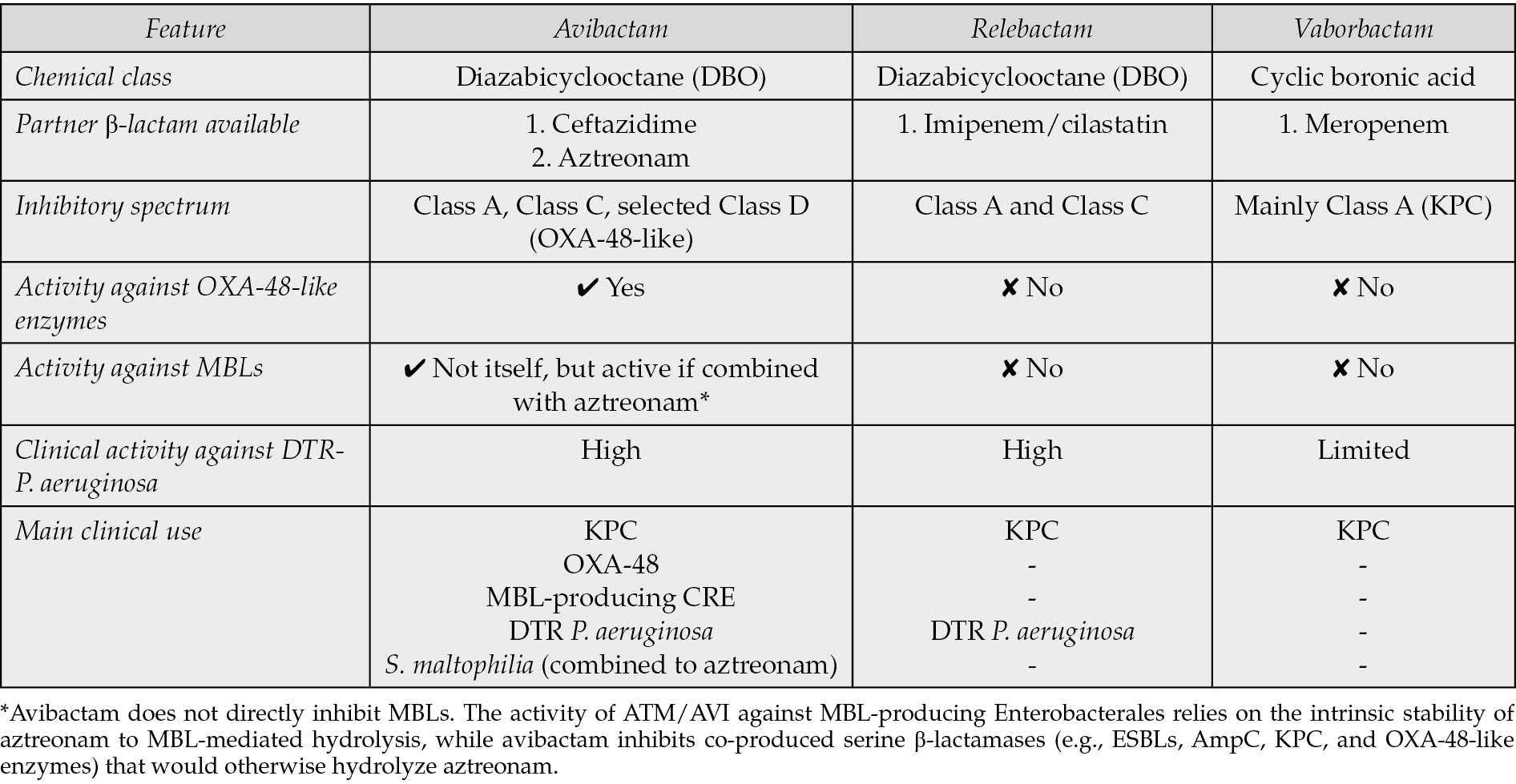
Two avibactam-based BLBLI are currently available (CZA and ATM/AVI), further expanding the clinical utility of avibactam. None of available β -lactamases alone, including avibactam, relebactam and vaborbactam, can inhibit MBLs. However, avibactam possesses a unique advantage when combined with aztreonam. Because aztreonam is intrinsically stable to hydrolysis by MBLs but is hydrolyzed by co-produced serine β-lactamases (including ESBLs, AmpC, and KPC enzymes), inhibition of these enzymes by avibactam protects aztreonam from degradation and restores its anti-MBL activity [16]. This complementary mechanism is unique to the ATM/AVI combination and explains its activity against MBL-producing Enterobacterales.
Finally, the three BLBLI combinations differ in their activity against other pathogens, since only CZA and IR retain activity against difficult-to-treat (DTR) Pseudomonas aeruginosa.
CURRENT CRE EPIDEMIOLOGY
Current CRE epidemiology is characterized by two major challenges that are profoundly changing the management of these infections. The first is the emergence and dissemination of KPC variants associated with resistance to novel BLBLI combinations. The second is the epidemiological shift from the predominance of KPC toward an increasing prevalence of MBL-producing Enterobacterales. Together, these changes have made therapeutic decision-making increasingly complex and emphasize the importance of rapidly identifying the underlying carbapenemase to optimize antimicrobial therapy [17].
Over the last decade, the number of KPC variants has increased dramatically. To date, more than 260 variants have been described worldwide, most of them within the past three years [18-20]. One of the earliest and most prevalent variant is the D179Y KPC-31, which typically confers resistance to CZA while restoring susceptibility to meropenem [21]. Although resistance to CZA remains the most common phenotype of KPC variants, recent studies documented the emergence of variants that also confer cross-resistance to other BLBLI combinations, including MV and IR, as well as to cefiderocol (FDC) [22]. The dissemination of KPC variants is highly heterogeneous across geographical regions. In some centers, KPC variants account for 10-15% of all KPC-producing isolates, whereas in others they remain only sporadically detected [22-23]. Therefore, knowledge of the local epidemiology is crucial, as it may influence empirical antimicrobial therapy.
The global spread of MBLs, including New Delhi metallo-β-lactamase (NDM) and VIM, further complicate the management of patients with CRE infections. In the United States, the proportion of KPC-producing Enterobacterales decreased from 73.8% in 2019 to 57.1% in 2021, whereas MBL-producing CRE, particularly NDM-producers, increased from 3.8% to 20.4% in the same period [24]. Similar trends have been observed in Europe. In Italy, a large regional outbreak of NDM-producing Enterobacterales was reported in Northwestern area of the Tuscany region in 2018, resulting in a shift from KPC to NDM as the predominant carbapenemase in the region [25-28].
Together, these epidemiological changes have changed the management of CRE infections, with important implications for both empirical and targeted antimicrobial therapy.
ANTIMICROBIAL SUSCEPTIBILITY TESTING AND RAPID DIAGNOSTICS
Accurate antimicrobial susceptibility testing (AST) and rapid identification of the underlying carbapenemase are essential to guide the use of avibactam-based combinations. CZA susceptibility can be assessed using standardized reference or validated commercial methods and interpreted according to current EUCAST or CLSI criteria. Similarly, the availability of the fixed-dose ATM/AVI combination allows susceptibility testing to be standardized using specific interpretive criteria, where available. Because breakpoints, testing recommendations, and regulatory approvals may differ between EUCAST and CLSI and may evolve over time, laboratories should refer to the most recent recommendations applicable in their setting.
Rapid differentiation between KPC, MBLs (NDM, VIM, IMP), and OXA-48-like enzymes may support early treatment selection, particularly in severe infections [17]. Importantly, emerging KPC variants may confer CZA resistance and produce unusual susceptibility phenotypes, highlighting the importance of integrating rapid carbapenemase identification with conventional AST and, when appropriate, molecular characterization.
EMPIRICAL THERAPY USING AVIBACTAM-BASED COMBINATIONS
Selecting the optimal empirical antimicrobial therapy remains one of the greatest challenges in the management of CRE infections [29]. Delayed administration of an active antimicrobial agent is independently associated with increased mortality in septic patients [4, 7]. Thus, identifying patients at high risk of CRE infection and rapidly defining the most likely carbapenemase are key steps in selecting the most appropriate empirical regimen. Knowledge of intestinal colonization status may be useful in guiding the choice of empirical antimicrobial therapy and reducing the risk of early inappropriate treatment [30]. However, colonization status should not be considered the sole predictor of MDR etiology, as infections caused by susceptible organisms may also occur in patients with rectal CRE colonization. To date, no studies have demonstrated that an empirical treatment strategy based on rectal colonization status is associated with improved clinical outcomes. Therefore, the following considerations should be regarded as expert opinion and the treatment decisions should be individualized according to local epidemiology, previous microbiological data, infection source, severity of illness, and patient-specific risk factors.
Avibactam-based combinations may have an important role as empirical therapy in patients with septic shock in setting with high prevalence of MDR-GNB. Figure 1 shows a practical algorithm that may be used by clinicians to start the most appropriate empirical therapy in septic patients with CRE colonization. It is based on the authors’ expert opinion and can be adapted to local epidemiology and resistance patterns.
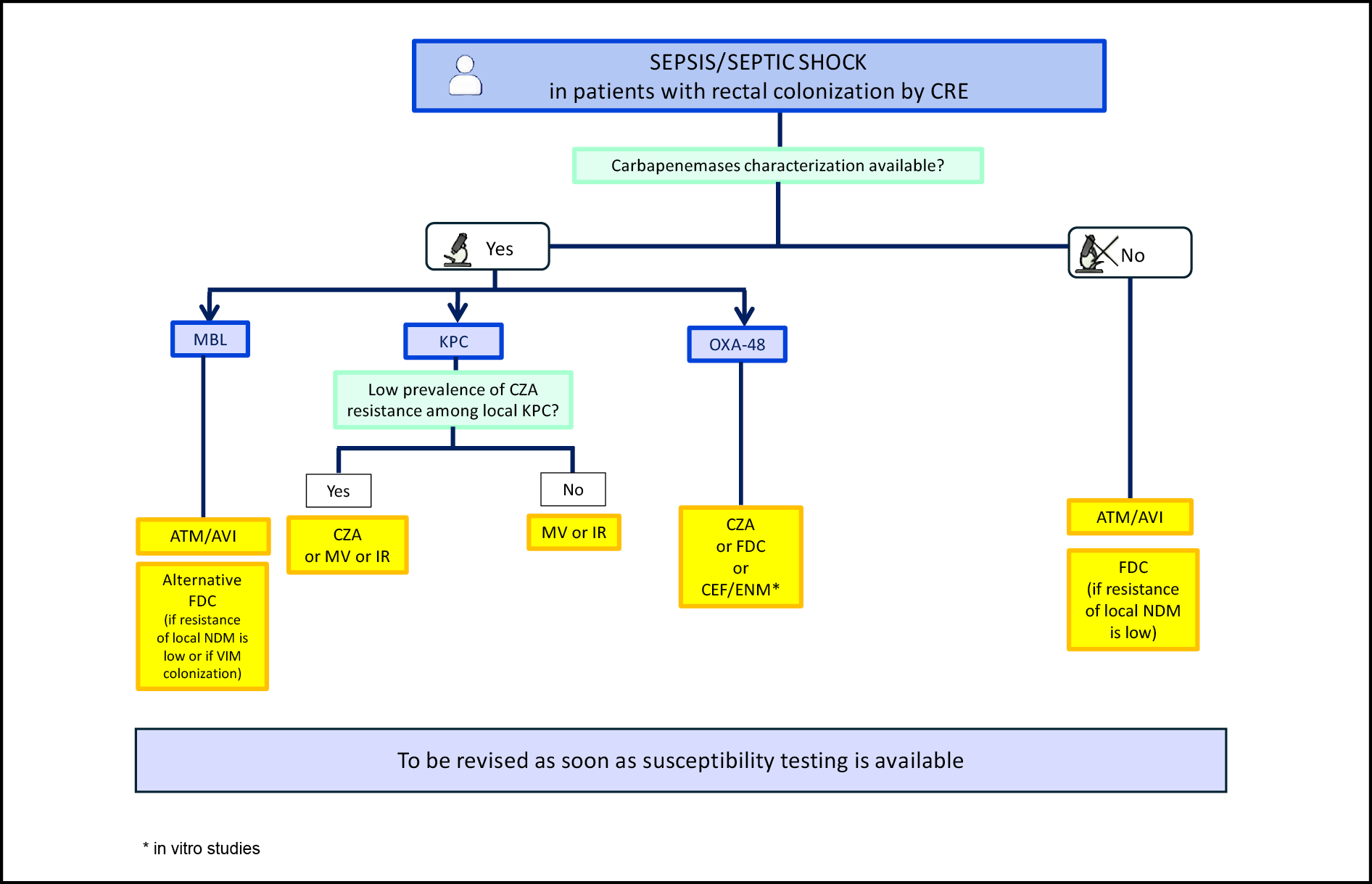
Figure 1 - Practical algorithm for empirical therapy in patients with rectal colonization by carbapenem-resistant Enterobacterales who develop sepsis or septic shock (aiming at differentiating the use of AVI-based combinations). The proposed algorithm reflects the authors’ expert opinion. Treatment decisions should be individualized according to local epidemiology, previous microbiological data, infection source, severity of illness, and patient-specific risk factors.
In known KPC rectal carriers, the choice between CZA, MV and IR may depend on several considerations. Local epidemiology plays a pivotal role in this choice. CZA may be considered among the empirical options in settings where the prevalence of CZA-resistant KPC variants is low. Although no prospective validated prevalence threshold is currently available, knowledge of local epidemiology may help guide this decision since it may greatly vary across different centers. In addition, because CZA retains activity against Pseudomonas aeruginosa, it represents, together with IR and FDC, an attractive empirical option for septic KPC-rectal carriers at high risk of Pseudomonas aeruginosa, particularly those with hospital-acquired or ventilator-associated pneumonia, prolonged intensive care unit (ICU) stay, neutropenia, or previous colonization or infection with difficult-to-treat (DTR) Pseudomonas aeruginosa.
In patients colonized with MBL-producing Enterobacterales, ATM/AVI should be considered the preferred empirical option, given its excellent in vitro activity against MBL-producing isolates, which exceeds 98% [31-32].
Finally, in case of patients with known rectal colonization by CRE but without further microbiological characterization, ATM/AVI may represent an appropriate therapeutic empirical option considering its wide spectrum of activity against different carbapenemases (KPC, NDM, OXA-48).
TARGETED THERAPY WITH AVIBACTAM-BASED COMBINATIONS
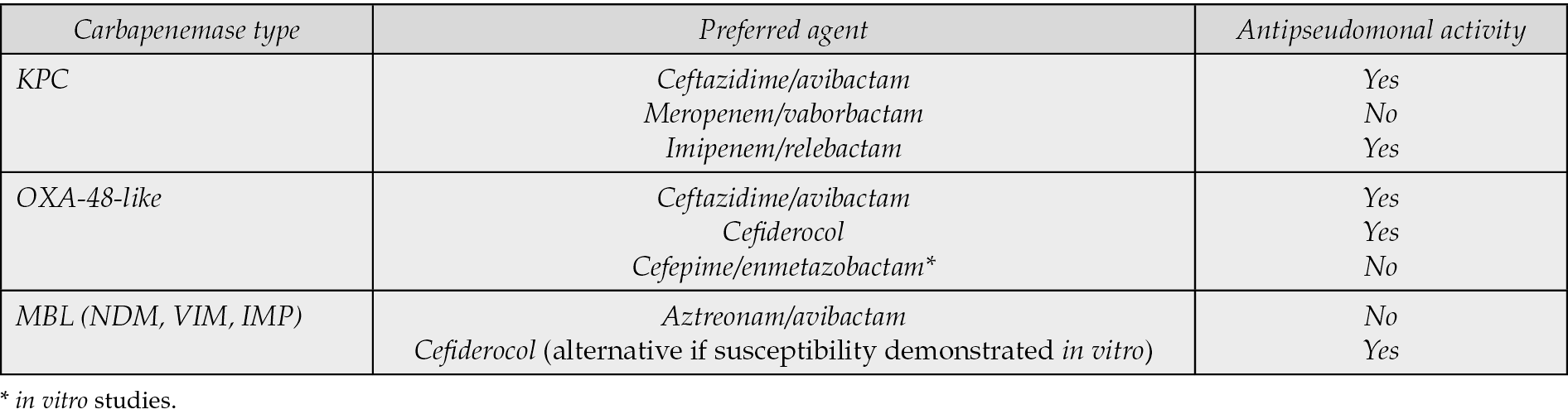
Avibactam-based combinations are now among the most valuable therapeutic options for MDR GNB infections. Defining their optimal place in therapy is essential to maximize clinical benefit while preserving their activity and limiting the emergence of resistance. Figure 2 shows the place in therapy of avibactam-based combination when used as targeted therapy. Table 2 summarizes the preferred therapeutic options according to carbapenemase type and their anti-pseudomonal activity.
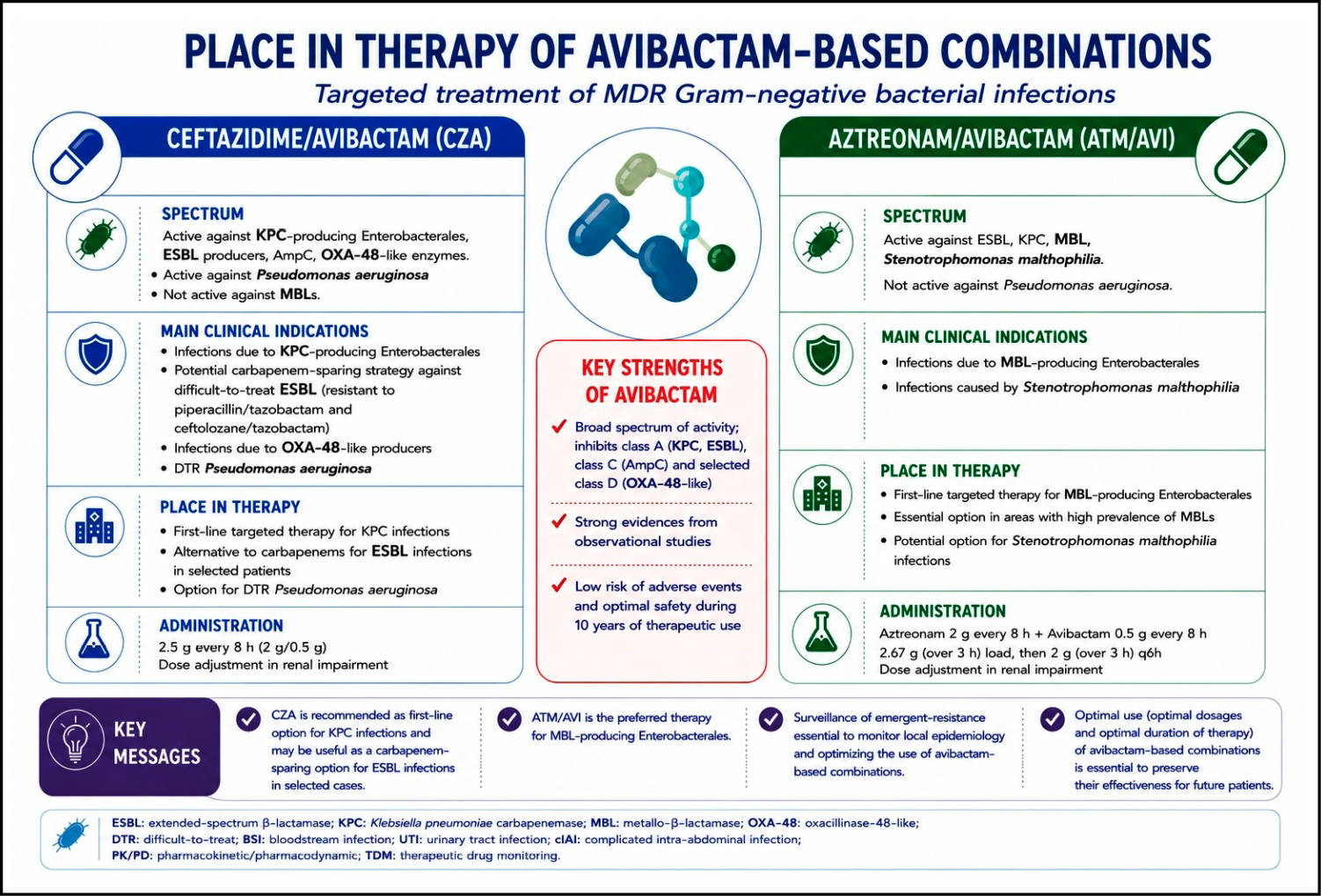
Figure 2 - Place in therapy of avibactam-based combinations for targeted treatment of CRE infections.
Table 2 - Available antibiotic options against different carbapenemases.
CZA is a cornerstone of therapy for infections caused by KPC-producing Klebsiella pneumoniae. Despite the lack of randomized controlled trials, large multicenter observational studies and subsequent meta-analyses have shown that CZA is associated with significantly lower mortality, improved clinical outcomes, and reduced nephrotoxicity compared with colistin-based regimens and other traditional therapeutic antibiotics [5, 33-35]. However, several clinical questions remain unanswered. Among these, the comparison among CZA, MV and IR is one of the most important. A recent observational study including 73 patients with KPC infection showed that 30-day mortality was similar in patients treated with CZA or MV, although the emergence of resistance occurred more frequently in the CZA group [35]. However, to date, there is no robust comparative evidence demonstrating the superiority of one BLBLI. Most available comparative data are derived from observational studies and should be interpreted cautiously because of the potential for residual confounding and confounding by indication. Direct comparative evidence between CZA and other novel agents remains limited, precluding definitive conclusions regarding the superiority of a specific agent. Consequently, future research should focus on identifying the clinical profiles of patients who are most likely to benefit from a specific agent. Factors such as the site of infection, pharmacokinetic/pharmacodynamic characteristics, local epidemiology, concomitant pathogens requiring additional antimicrobial coverage, spectrum of activity, risk of on-treatment resistance emergence, and antimicrobial stewardship considerations may all contribute to optimizing the selection among CZA, MV, and IR [36]. A second unresolved issue concerns whether CZA should be used as monotherapy or in combination with other antimicrobial agents. To date, available clinical evidence has not demonstrated a consistent advantage of combination therapy over monotherapy [36]. Although a recent meta-analysis found that combination therapy was associated with higher microbiological eradication rates, this benefit did not translate into improved clinical outcomes [37]. Importantly, the certainty of the available evidence remains low, as most studies were retrospective and therefore susceptible to confounding. Patients receiving combination therapy had greater disease severity, more comorbidities, and were more likely to have difficult-to-treat infections, including pneumonia. Moreover, the marked heterogeneity of companion agents precludes conclusions regarding the efficacy of specific combination regimens. Overall, current evidence does not support the routine use of combination therapy for CRE infections. Rather, combination therapy should be reserved for selected clinical scenarios, such as high-inoculum infections, deep-seated infections, or patients at high risk of microbiological failure. Another important consideration is the emergence of resistance during CZA therapy. Optimizing pharmacokinetic/pharmacodynamic (PK/PD) target attainment may represent an effective strategy to minimize this risk. In a recent study involving patients with KPC-producing Klebsiella pneumoniae infections, a therapeutic drug monitoring (TDM)-guided dosing strategy aimed at achieving aggressive PK/PD targets significantly reduced the emergence of CZA resistance during the follow-up [38] .
Beyond its established role against KPC-producing Enterobacterales, CZA also exhibits excellent activity against ESBL-producing Enterobacterales, OXA-48-producing Enterobaterales and DTR-Pseudomonas aeruginosa. Thus, it may be a potential carbapenem-sparing strategy in specific infections due to difficult-to-treat ESBL- or OXA-48-producing Enterobacterales (especially if resistant to piperacillin/tazobactam and ceftolozane/tazobactam) and in patients at high risk or with documented DTR-Pseudomonas aeruginosa infections. These additional potential roles of CZA are discussed below.
The combination of ATM/AVI is recommended as the first-line option for infections caused by MBL-producing Enterobacterales. Observational studies demonstrated that the combination CZA plus ATM is associated with better clinical outcome compared to other active antibiotics [6, 7]. Although the clinical evidence currently available is derived from observational studies evaluating the off-label combination of CZA plus ATM, these studies provide clinical support for the AVI-mediated restoration of ATM activity against MBL-producing Enterobacterales and, therefore, support the use of the fixed-dose ATM/AVI formulation. Consequently, these data have been sufficiently robust to support the inclusion of this combination as the preferred therapeutic option for MBL-producing Enterobacterales infections in current international guidelines [17, 39, 40].
The recent development of the fixed-dose ATM/AVI formulation seems to have PK/PD advantages. A population PK/PD model highlighted the advantage of ATM/AVI showing that approved dose regimens are optimized for joint PTA [41]. Importantly, avibactam exposure was approximately 25% lower with CZA plus ATM, resulting in a joint probability of target attainment below 85%, compared with >90% for the approved ATM/AVI regimen. The lower probability of target attainment was driven by suboptimal avibactam exposure and may reflect the different antibiotic-to-inhibitor ratios of the two formulations (3:1 for ATM/AVI versus 4:1 for CZA) [41]. Another major concern about the use of CZA plus ATM is represented by the lack of a standardized antimicrobial susceptibility testing. Several laboratory approaches, including disc approximation assays, broth disc elution, checkerboard methods, time-kill assays, and gradient strip superposition techniques, have been proposed, but these methods lack standardization, may yield heterogeneous results, and often require subjective interpretation.
Finally, from a practical point of view, administration of CZA plus ATM may also be challenging. Optimal PK/PD exposure is theoretically achieved when both agents are infused simultaneously; however, this is often difficult in patients with limited venous access or a single vascular line.
CEFTAZIDIME/AVIBACTAM: BEYOND KPC
In the era of increasing carbapenem resistance, minimizing unnecessary use of carbapenems is crucial. However, despite its limitations, the MERINO randomized controlled trial found a significant lower 30-day mortality in patients with ESBL-infections receiving meropenem compared to those receiving piperacillin/tazobactam [42]. Moreover, resistance to piperacillin/tazobactam is increasing among ESBL isolates. In this context, new BLBLIs may represent a therapeutic options against difficult-to-treat ESBL infections [43]. A systematic review and metanalysis of randomized controlled trials comparing CZA with carbapenems for the treatment of ESBL-producing Enterobacterales showed that clinical response was similar in patients receiving CZA and carbapenems [44, 45]. Moreover, CZA was associated with higher microbiological cure in patients with urinary infections by ESBL [46]. However, the use of new BLBLI combinations against ESBL-producing Enterobacterales, should be carefully reserved for selected clinical scenarios, including infections due to difficult-to-treat ESBL-producing Enterobacterales (e.g., resistance to ceftolozane-tazobactam) or in patients with contraindications to other therapies or in settings where other anti-ESBL agents, such as cefepime-enmetazobactam, are unavailable. Indiscriminate use of CZA for ESBL-producing organisms should be avoided to preserve its use against CRE.
Beyond Enterobacterales, CZA is one of the BLBLI combinations retaining reliable activity against MDR Pseudomonas aeruginosa, including DTR isolates [47]. Its broad antipseudomonal spectrum, together with its activity against KPC-producing Enterobacterales, makes CZA particularly attractive in critically ill patients at risk of both pathogens.
AZTREONAM/AVIBACTAM: BEYOND MBL
The potential clinical role of ATM/AVI is not limited to MBL-producing Enterobacterales. One of the most promising applications is the treatment of Stenotrophomonas maltophilia infections. This organism is intrinsically resistant to most β-lactams because it simultaneously produces the metallo-β-lactamase L1 and the serine cephalosporinase L2. While ATM is stable against L1-mediated hydrolysis, it is readily hydrolyzed by L2; conversely, avibactam effectively inhibits L2 but has no activity against L1. Consequently, ATM/AVI combination restores ATM activity by simultaneously overcoming both intrinsic resistance mechanisms [48, 49]. Several surveillance studies have consistently demonstrated potent in vitro activity of ATM/AVI against Stenotrophomonas maltophilia, including isolates resistant to trimethoprim-sulfamethoxazole, and quinolones, with susceptibility rates approaching 99-100% [50]. These findings are particularly relevant considering the intrinsic MDR phenotype of Stenotrophomonas maltophilia and the limited therapeutic options available for difficult-to-treat infections. Infections caused by Stenotrophomonas maltophilia represent a clinical challenge for several reasons:
1) it is difficult to discriminate colonization versus infection by this pathogen;
2) the pathogen exhibits an intrinsic MDR phenotype;
3) clinical breakpoints have not been established for several commonly used antimicrobial agents; and
4) comparative clinical studies are lacking, and the optimal therapeutic approach, including the choice between monotherapy and combination therapy and the selection of the most appropriate antimicrobial regimen, remains uncertain [49, 50].
The IDSA Guidance suggests combination therapy for all Stenotrophomonas maltophilia infections. Potential regimens may include two of the following: cefiderocol, minocycline, trimethoprim-sulfamethoxazole, levofloxacin or the combination of aztreonam/avibactam [49]. Traditional options for treating Stenotrophomonas maltophilia infections, including trimethoprim-sulfamethoxazole or quinolones, are associated with side effects and rediuced safety and may be sub-optimal for the treatment of severe infections in immunocompromizes patients.
Microbiological studies showed that ATM/AVI has an excellent in vitro activity against Stenotrophomonas maltophilia [51, 52]. Aztreonam given in combination with avibactam targets chromosomally encoded L1eL2 b-lactamases because of the capacity of avibactam to covalently bind and inhibit L2 enzymes, and the lack of activity of L1 enzymes against aztreonam [49]. Clinical experience with ATM/AVI for Stenotrophomonas maltophilia infections remains limited, and further studies are needed.
ATM/AVI also demonstrates excellent in vitro activity against other difficult-to-treat non-fermenting GNB including Burkholderia cepacia [52]. Burkholderia cepacia complex is an intrinsically MDR non-fermenting GNB associated with difficult-to-treat respiratory and invasive infections, particularly in patients with cystic fibrosis or severe immunocompromising conditions. The complex β-lactam resistance phenotype of Burkholderia cepacia complex includes the production of β-lactamases that may compromise the activity of several conventional β-lactams. Avibactam-mediated inhibition of susceptible serine β-lactamases may protect aztreonam from hydrolysis, providing the microbiological rationale for the activity of ATM/AVI against selected Burkholderia cepacia complex isolates [53]. In vitro studies have demonstrated good activity of ATM/AVI against Burkholderia cepacia complex [53]. However, in contrast to MBL-producing Enterobacterales, clinical evidence remains extremely limited. Thus, ATM/AVI may represent a potential rescue option for selected difficult-to-treat Burkholderia cepacia complex infections [54]. Further clinical studies to evaluate its efficacy in these infections are warranted.
CONCLUSIONS
Avibactam-based combinations have substantially expanded the therapeutic armamentarium against MDR GNB and currently represent the cornerstone of treatment for several CRE infections. Their availability also requires a rational and individualized therapeutic approach. Selection of the most appropriate regimen should integrate the underlying resistance mechanism, local epidemiology, infection site, PK/PD considerations and patient-specific factors. Appropriate antimicrobial stewardship, together with rapid microbiological diagnosis and optimization of antimicrobial exposure, will be essential for increasing therapeutic appropriateness and improve patients outcome while limiting potential emergence of resistance.
Conflicts of interest
GT received speaker honoraria by Shionogi, Gilead, Advanz, Pfizer, MSD. MF received unconditional grants/or speaker honoraria from Shionogi, Pfizer, Menarini, Gilead, Advanz Pharma, Meji Pharma, Tillots. The other authors have nothing to declare.
Funding
No specific funding.
REFERENCES
[1] Falcone M, Tiseo G, Carbonara S, et al. Mortality Attributable to Bloodstream Infections Caused by Different Carbapenem-Resistant Gram-Negative Bacilli: Results From a Nationwide Study in Italy (ALARICO Network). Clin Infect Dis. 2023; 76: 2059-2069.
[2] Falcone M, Bassetti M, Tiseo G, et al. Time to appropriate antibiotic therapy is a predictor of outcome in patients with bloodstream infection caused by KPC-producing Klebsiella pneumoniae. Crit Care. 2020; 24: 29.
[3] Falcone M, Carbonara S, Marino A, et al. Impact of multidrug resistance in cancer patients with bloodstream infections caused by Gram-negative bacilli: results from a multicentre study. JAC Antimicrob Resist. 2025; 7: dlaf116
[4] Giacobbe DR, Marelli C, Cattardico G, et al. Mortality in KPC-producing Klebsiella pneumoniae bloodstream infections: a changing landscape. J Antimicrob Chemother. 2023; 78: 2505-2514.
[5] Tumbarello M, Raffaelli F, Giannella M, et al. Ceftazidime-avibactam use for Klebsiella pneumoniae carbapenemase-producing K. pneumoniae infections: a retrospective observational multicenter study. Clin Infect Dis. 2021; 73: 1664-1676.
[6] Falcone M, Daikos GL, Tiseo G, et al. Efficacy of ceftazidime-avibactam plus aztreonam in patients with bloodstream infections caused by metallo-β-lactamase-producing Enterobacterales. Clin Infect Dis. 2021; 72: 1871-1878.
[7] Falcone M, Giordano C, Leonildi A, et al. Clinical features and outcomes of infections caused by metallo-β-lactamase-producing Enterobacterales: a 3-year prospective study from an endemic area. Clin Infect Dis. 2024; 78: 1111-1119. Erratum in: Clin Infect Dis. 2024; 79: 580.
[8] Adler A, Ghosh H, Gross A, et al. Molecular features and transmission of NDM-producing Enterobacterales in Israeli hospitals. J Antimicrob Chemother. 2023; 78: 719-723.
[9] Tiseo G, Stefani S, Fasano FR, Falcone M. The burden of infections caused by metallo-beta-lactamase-producing Enterobacterales in Italy: epidemiology, outcomes, and management. Infez Med. 2025; 33: 249-260.
[10] Falcone M, Mezzatesta ML, Perilli M, et al. Infections with VIM-1 metallo-{beta}-lactamase-producing Enterobacter cloacae and their correlation with clinical outcome. J Clin Microbiol. 2009; 47: 3514-3519.
[11] Kanj SS, Kantecki M, Arhin FF, Gheorghe M. Epidemiology and outcomes associated with MBL-producing Enterobacterales: A systematic literature review. Int J Antimicrob Agents. 2025; 65: 107449.
[12] Carmeli Y, Price M, Daikos GL, et al. Management of metallo-β-lactamase-producing Enterobacterales infections: a modified Delphi study. JAC Antimicrob Resist. 2026; 8: dlag030.
[13] Al-Tawfiq JA, Sah R, Mehta R, Apostolopoulos V, Temsah MH, Eljaaly K. New antibiotics targeting Gram-negative bacilli. Infez Med. 2025; 33: 4-14.
[14] Sader HS, Mendes RE, Ryan Arends SJ, Doyle TB, Castanheira M. Activity of aztreonam-avibactam and other β-lactamase inhibitor combinations against Gram-negative bacteria isolated from patients hospitalized with pneumonia in United States medical centers (2020-2022). BMC Pulm Med. 2025; 25: 38.
[15] Falcone M, Paterson D. Spotlight on ceftazidime/avibactam: a new option for MDR Gram-negative infections. J Antimicrob Chemother. 2016;7 1: 2713-2722.
[16] Marshall S, Hujer AM, Rojas LJ, et al. Can ceftazidime-avibactam and aztreonam overcome β-lactam resistance conferred by Metallo-β-Lactamases in Enterobacteriaceae? Antimicrob Agents Chemother. 2017; 61: e02243-e02316.
[17] Tiseo G, Brigante G, Giacobbe DR, et al. Diagnosis and management of infections caused by multidrug-resistant bacteria: guideline endorsed by the Italian Society of Infection and Tropical Diseases (SIMIT), the Italian Society of Anti-Infective Therapy (SITA), the Italian Group for Antimicrobial Stewardship (GISA), the Italian Association of Clinical Microbiologists (AMCLI) and the Italian Society of Microbiology (SIM). Int J Antimicrob Agents. 2022; 60: 106611.
[18] Ding L, Shen S, Chen J, et al. Klebsiella pneumoniae carbapenemase variants: the new threat to global public health. Clin Microbiol Rev. 2023; 36: e0000823.
[19] Brunetti F, Marshall SH, Bethel CR, et al. Standardized numbering and alignment of the KPC family of β-lactamases. Antimicrob Agents Chemother. 2026: e0186825.
[20] Hanna S, La K, Yoshii Y, Gits-Muselli M, et al. Exploring mutational possibilities of KPC variants to reach high level resistance to cefiderocol. Sci Rep. 2025; 15: 31312.
[21] Tiseo G, Falcone M, Leonildi A, et al. Meropenem-vaborbactam as salvage therapy for ceftazidime-avibactam-, cefiderocol-resistant ST-512 Klebsiella pneumoniae-producing KPC-31, a D179Y variant of KPC-3. Open Forum Infect Dis. 2021; 8: ofab141.
[22] Falcone M, Tiseo G, Shields RK. Resistance development to new anti-Gram negatives antibiotics during treatment: geographical epidemiology and risk factors. Clin Microbiol Infect. 2026; 32: 536-542.
[23] Boattini M, Bianco G, Bastos P, et al. Prevalence and mortality of ceftazidime/avibactam-resistant KPC-producing Klebsiella pneumoniae bloodstream infections (2018-2022). Eur J Clin Microbiol Infect Dis. 2024; 43: 155-166.
[24] Sader HS, Mendes RE, Carvalhaes CG, et al. Changing epidemiology of carbapenemases among carbapenem-resistant Enterobacterales from United States hospitals and the activity of aztreonam-avibactam against contemporary Enterobacterales (2019-2021). Open Forum Infect Dis. 2023; 10: ofad046.
[25] Tavoschi L, Forni S, Porretta A, et al. Prolonged outbreak of New Delhi metallobeta-lactamase-producing carbapenem-resistant Enterobacterales (NDMCRE), Tuscany, Italy, 2018 to 2019. Euro Surveill. 2020; 25: 2000085.
[26] Falcone M, Tiseo G, Antonelli A, et al. Clinical Features and outcomes of bloodstream infections caused by New Delhi metallo-β-lactamase-producing Enterobacterales during a regional outbreak. Open Forum Infect Dis. 2020; 7: ofaa011.
[27] Roscioli E, Zucconi Galli Fonseca V, Bosch SS, et al. Monoclonal antibodies protect against pandrug-resistant Klebsiella pneumoniae. Nature. 2025; 646: 1204-1213.
[28] Falcone M, Giordano C, Barnini S, et al. Extremely drug-resistant NDM-9-producing ST147 Klebsiella pneumoniae causing infections in Italy, May 2020. Euro Surveill. 2020; 25(48): 2001779.
[29] Falcone M, Tiseo G, Dentali F, et al. Predicting resistant etiology in hospitalized patients with blood cultures positive for Gram-negative bacilli. Eur J Intern Med. 2018; 53: 21-28.
[30] Falcone M, Tiseo G, Galfo V, et al. Bloodstream infections in patients with rectal colonization by Klebsiella pneumoniae producing different type of carbapenemases: a prospective, cohort study (CHIMERA study). Clin Microbiol Infect. 2022; 28: 298.e1-298.e7.
[31] Rossolini GM, Arhin FF, Kantecki M. In vitro activity of aztreonam-avibactam and comparators against metallo-β-lactamase-producing Enterobacterales from ATLAS Global Surveillance Program, 2016-2020. J Glob Antimicrob Resist. 2024; 36: 123-131.
[32] Falcone M, Tiseo G. Cefiderocol for the treatment of metallo-β-lactamases producing Gram-Negative bacilli: lights and shadows from the literature. Clin Infect Dis. 2022; 75: 1085-1087.
[33] Khoshdel N, Noursalehigarakani M, Seghatoleslami ZS, et al. Efficacy of Ceftazidime-avibactam in treating Gram-negative infections: a systematic review and meta-analysis. Eur J Clin Microbiol Infect Dis. 2025; 44: 767-778.
[34] Pérez-Nadales E, Fernández-Ruiz M, Natera AM, et al. Efficacy of ceftazidime-avibactam in solid organ transplant recipients with bloodstream infections caused by carbapenemase-producing Klebsiella pneumoniae. Am J Transplant. 2023; 23: 1022-1034.
[35] Karaba SM, Hareza DA, Munita JM, et al. Comparative outcomes of ceftazidime-avibactam versus meropenem-vaborbactam for KPC-producing Enterobacterales infections. Antimicrob Agents Chemother. 2026; 70: e0160225.
[36] Meschiari M, Asquier-Khati A, Tiseo G, et al. Italian Society of Infectious and Tropical Diseases (SIMIT), and the French Society of Infectious Diseases (SPILF). Treatment of infections caused by multidrug-resistant Gram-negative bacilli: A practical approach by the Italian (SIMIT) and French (SPILF) Societies of Infectious Diseases. Int J Antimicrob Agents. 2024; 64: 107186.
[37] Hsu W, Chuang MH, Tsai WW, Lai CC, Lai HY, Tang HJ. Ceftazidime-avibactam combination therapy versus monotherapy for treating carbapenem-resistant gram-negative infection: a systemic review and meta-analysis. Infection. 2024; 52: 2029-2042.
[38] Gatti M, Rinaldi M, Cojutti PG, et al. A pre-post quasi-experimental study of antimicrobial stewardship exploring the impact of a multidisciplinary approach aimed at attaining an aggressive joint pharmacokinetic/pharmacodynamic target with ceftazidime/avibactam on treatment outcome of KPC-producing Klebsiella pneumoniae infections and on ceftazidime/avibactam resistance development. Antimicrob Agents Chemother. 2025; 69: e0048825.
[39] Tamma PD, Heil EL, Justo JA, Mathers AJ, Satlin MJ, Bonomo RA. Infectious Diseases Society of America 2024 Guidance on the Treatment of Antimicrobial-Resistant Gram-Negative Infections. Clin Infect Dis. 2024; 7: ciae403.
[40] Paul M, Carrara E, Retamar P, et al. European Society of Clinical Microbiology and Infectious Diseases (ESCMID) guidelines for the treatment of infections caused by multidrug-resistant Gram-negative bacilli (endorsed by European society of intensive care medicine). Clin Microbiol Infect. 2022; 28: 521-547.
[41] Xie R, Rogers H, Chow JW, Soto E, Raber SR. Population pharmacokinetic/pharmacodynamic modeling to optimize aztreonam-avibactam dose regimens for adult patients. Antimicrob Agents Chemother. 2025; 69: e0195024.
[42] Harris PNA, Tambyah PA, Lye DC, et al. Effect of piperacillin-tazobactam vs meropenem on 30-day mortality for patients with E coli or Klebsiella pneumoniae bloodstream infection and ceftriaxone resistance: a randomized clinical trial. JAMA. 2018; 320: 984-994. Erratum in: JAMA. 2019; 321: 2370.
[43] Falcone M, Tiseo G, Arcari G, et al. Spread of hypervirulent multidrug-resistant ST147 Klebsiella pneumoniae in patients with severe COVID-19: an observational study from Italy, 2020-21. J Antimicrob Chemother. 2022; 77: 1140-1145.
[44] Isler B, Ezure Y, Romero JLG, Harris P, Stewart AG, Paterson DL. Is ceftazidime/avibactam an option for serious infections due to extended-spectrum-β-lactamase- and AmpC-producing Enterobacterales? A systematic review and meta-analysis. Antimicrob Agents Chemother. 2020; 65: e01052-e01120.
[45] Rezzoug I, Ouacel K, Droit T, et al. Therapeutic challenges in treating ESBL- and/or AmpC-producing non-carbapenemase-producing Enterobacterales: an in vitro evaluation of novel β-lactam/β-lactamase inhibitor combinations and cefiderocol. J Antimicrob Chemother. 2025; 80: 3297-3305.
[46] Sternbach N, Leibovici Weissman Y, Avni T, Yahav D. Efficacy and safety of ceftazidime/avibactam: a systematic review and meta-analysis. J Antimicrob Chemother. 2018; 73: 2021-2029.
[47] Falcone M, Galfo V, Tiseo G. Not all carbapenem-resistant Pseudomonas aeruginosa strains are alike: tailoring antibiotic therapy based on resistance mechanisms. Curr Opin Infect Dis. 2024; 37: 594-601.
[48] Mojica MF, Humphries R, Lipuma JJ, et al. Clinical challenges treating Stenotrophomonas maltophilia infections: an update. JAC Antimicrob Resist. 2022; 4: dlac040
[49] Monardo R, Mojica MF, Ripa M, Aitken SL, Bonomo RA, van Duin D. How do I manage a patient with Stenotrophomonas maltophilia infection? Clin Microbiol Infect. 2025; 31: 1291-1297.
[50] Sader HS, Castanheira M, Arends SJR, Doyle TB. Antimicrobial susceptibility of Stenotrophomonas maltophilia from United States medical centers (2019-2023). Antimicrob Agents Chemother. 2025; 69: e0012425.
[51] Bryan A, Shields-Pruiett M, Berger H, et al. In vitro susceptibility of Stenotrophomonas maltophilia and other carbapenem non-susceptible Gram-negative rods in the Pacific Northwest to cefiderocol and aztreonam-avibactam. JAC Antimicrob Resist. 2026; 8: dlag105.
[52] Sader HS, Shortridge D, Ryan Arends SJ, Carvalhaes CG, Mendes RE, Castanheira M. Antimicrobial Activity of Aztreonam-Avibactam Against a Large Collection of Stenotrophomonas maltophilia and Burkholderia cepacia Species Complex Causing Infections in United States (US) Medical Centers (2016-2021). Open Forum Infect Dis. 2022; 9: ofac492. 1314.
[53] Jones AM, Dodd ME, Webb AK. Burkholderia cepacia: current clinical issues, environmental controversies and ethical dilemmas. Eur Respir J. 2001; 17: 295-301.
[54] Oyardi O, Celik DD, Turan T, Aksu B. Evaluation of the antimicrobial and antibiofilm activities of aztreonam-avibactam against the Burkholderia cepacia complex. Folia Microbiol (Praha). 2026 Aug 10. Epub ahead of print.