Le Infezioni in Medicina, n. 3, 364-373, 2023
doi: 10.53854/liim-3103-10
ORIGINAL ARTICLES
Antibiotic prophylaxis compliance differences in surgery and gynecology/obstetrics services in Huánuco, Peru
Vicky Panduro-Correa1,2, Walter Gomez-Gonzales3, Ali A. Rabaan4,5,6, Juan Carlos Valencia-Martínez7, Yeni Gutiérrez-Acuña7, Luis Chihuantito-Abal7, Jenny Zavaleta-Oliver2, Joshuan J. Barboza8, Alfonso J. Rodriguez-Morales9,10,11, Kovy Arteaga-Livias3,9
1Facultad de Medicina, Universidad Nacional Hermilio Valdizán. Huánuco, Peru;
2Escuela de Medicina Humana. Universidad Privada San Juan Bautista, Lima, Perú;
3Escuela de Medicina, Filial Ica. Universidad Privada San Juan Bautista, Ica, Peru;
4Molecular Diagnostic Laboratory, Johns Hopkins Aramco Healthcare, Dhahran, Saudi Arabia;
5College of Medicine, Alfaisal University, Riyadh, Saudi Arabia;
6Department of Public Health and Nutrition, The University of Haripur, Haripur, Pakistan;
7Facultad de Ciencias de la Salud. Universidad Andina del Cusco, Cuzco, Perú;
8Escuela de Medicina, Universidad Cesar Vallejo. Trujillo 13001, Peru;
9Maestria en Epidemiologia Clínica y Bioestadística. Universidad Científica del Sur, Lima 15014, Perú;
10Grupo de Investigación Biomedicina, Faculty of Medicine, Fundación Universitaria Autónoma de las Américas-Institución Universitaria Visión de las Américas, Pereira, Risaralda, Colombia;
11GIlbert and Rose-Marie Chagoury School of Medicine, Lebanese American University, Beirut, Lebanon
Article received 21 May 2023, accepted 25 July 2023
Corresponding author
Joshuan J. Barboza
E-mail: jbarbozame@ucvvirtual.edu.pe
SummaRY
Introduction: Surgical site infections (SSIs) can increase mortality and morbidity in patients after surgery. Antibiotic prophylaxis is an effective measure to prevent SSIs, but inappropriate prescription is frequent. The objective of the study was to determine compliance with the clinical practice guideline for antibiotic prophylaxis in the general surgery and gynecology and obstetrics wards in the city of Huánuco, Peru.
Methods: An analytical cross-sectional study was carried out on all surgical interventions in the general surgery and gynecology and obstetrics services during the year 2019. Compliance was determined based on the chosen antibiotic, dose, time of administration, and duration of prophylaxis. Related factors considered were age, presence of co-morbidities, surgery performed, duration of surgery, types of procedure, anesthesia, as well as years as a surgeon and anesthesiologist.
Results: A total of 557 medical records of patients with a median age of 33 years undergoing surgery were collected,. Antibiotic prophylaxis was correctly followed in all aspects in 14.6% of cases in the general surgery service and only in 5.6% of cases in the gynecology and obstetrics service. The correct duration of prophylaxis was 11.6% and 19.7% in general surgery and gynecology and obstetrics, respectively.
Conclusion: Low compliance with institutional clinical practice guidelines for antibiotic prophylaxis was identified in both services. However, surgical interventions in the general surgery service presented better compliance with antibiotic prophylaxis compared to gynecology and obstetrics procedures.
Keywords: Antibiotic prophylaxis, compliance, surgery, gynecology/obstetrics.
INTRODUCTION
Surgical site infections (SSIs) are infectious complications that may arise after a surgical procedure in the area surrounding the incision [1]. These infections are particularly common in developing countries and are considered one of the most common health care-associated infections [2, 3]. SSIs can cause serious health problems after surgery, increasing mortality and morbidity in patients. Additionally, SSIs prolong hospital stays, may require readmissions, and elevate medical costs associated with the surgical intervention [4].
One of the most effective measures to prevent SSIs and postoperative complications is antibiotic prophylaxis. This technique not only prevents tissue contamination at the time of incision, but also reduces bacterial load throughout the surgical procedure [5, 6]. In general, antibiotic prophylaxis is administered if the risk of SSIs exceeds 10%, except in cases of brain, cardiac, and vascular surgery, in which antibiotics are administered despite low risk, due to the possible serious consequences of infection in these patients [7].
Current guidelines clearly define the procedures that require antibiotic prophylaxis and recommend its administration as a single dose, except under certain specific circumstances [5]. Furthermore, it has been shown that prolonged administration of prophylaxis does not provide benefits and, on the contrary, is associated with adverse events and the generation of bacterial resistance. However, in clinical practice, prescribing errors in antibiotic prophylaxis are common, such as administering antibiotics after the time of incision or even after the complete surgical procedure, inappropriate use of antibiotics for a particular surgery, incorrect dosage, among others [6, 8].
Antibiotic prophylaxis guidelines are available as tools for physicians to use antimicrobials in a rational, safe, and effective manner. However, poor adherence to these guidelines has been reported worldwide, representing a challenge for the prevention of SSIs [9]. Adherence to clinical practice guidelines published by different societies and institutions could lead to cost reductions, decreased rates of SSIs, reduced bacterial resistance in both hospital and community settings, and benefits for patients undergoing surgery [10].
The objective of the study was to determine the adherence of general surgery and gynecology and obstetrics services to the institutional clinical practice guideline for antibiotic prophylaxis in a Peruvian social security hospital in the city of Huánuco and describe the factors associated with adherence according to the hospital service.
METHODS
An analytical cross-sectional study was conducted of all the surgical interventions that received antimicrobial prophylaxis in the gynecology-obstetrics and general surgery services. Age, the presence of comorbidities, the type of surgery performed, as well as its duration, the years of experience of the surgeon and anesthesiologist were considered as related factors.
Patient data were taken from Hospital II EsSalud-Huanuco, the referral hospital of the Peruvian social security in the region for a population of 180,000 insured individuals, from January 1st to June 30th, 2019. It is important to note that during the COVID-19 pandemic and the two subsequent years, elective surgical procedures were completely suspended at our institution. Only histories with complete data were used. All the data were collected by the researchers between April and June 2022.
All clinical histories and operative reports from both hospital services were reviewed. Patient data from obstetrical ward patients were taken from a previous study in two hospitals on prophylaxis in gynecology [11]. Procedures in which the patient had previously used antibiotics during hospitalization, or interventions within the previous three months, were excluded due to the possibility of conditioning the use of antimicrobials different from those recommended for antibiotic prophylaxis.
The investigators followed the wound classification of the Centers for Disease Control and Prevention to include only clean and clean-contaminated wounds, and both elective and emergency procedures were included [12].
The antibiotic used, appropriate dosage, time of administration, and duration of prophylaxis were individually evaluated according to the Surgical Prophylaxis guidelines published by the Institute of Health Technology Assessment and Research (IETSI) of the Social Security of Peru (EsSalud) [13]. The IETSI guidelines follow those for antibiotic prophylaxis from the United Kingdom and the American Society for Hospital Pharmacists (ASHP) [5]. In our study, the surgeons were responsible for prescribing antibiotic prophylaxis, and they determined the need for prophylaxis based on the pre-operative condition of the patient and the surgical procedure to be performed. Subsequently, the administration of the prophylactic antibiotic was carried out by the anesthesiologist immediately before beginning the operating room procedures.
We established the following definitions for assessing antibiotic prophylaxis compliance:
Correct antibiotic. Antibiotics were deemed correct if they aligned with the recommendations provided by the prophylaxis guidelines. Conversely, the administration of any antibiotics other than those specified in the guidelines was categorized as incorrect.
Correct dose. The dose was considered correct if it corresponded to the dosage recommended by the prophylaxis guidelines. Any deviation from the recommended dosage was classified as incorrect.
Correct time of administration. This parameter was evaluated based on the timing of antibiotic administration. It was deemed correct if the antibiotic was administered within 60 minutes prior to incision. Administration beyond 60 minutes before the incision or after the incision was considered incorrect.
Correct duration of prophylaxis. The duration of prophylaxis was deemed correct if the administration of the antibiotic ceased the same day as the surgery. If the antibiotic continued to be administered in the following days, it was classified as incorrect.
Overall compliance. The extent to which surgeries adhered to the recommended guidelines for antibiotic prophylaxis in both surgical and obstetrics/gynecology procedures encompassed the correct choice of antibiotics, correct dosage, correct timing of administration, and the correct duration of prophylaxis. For an intervention to be considered overall compliant, it must meet all four parameters in their entirety.
The Stata CE v.16 (StataCorp LLC, USA) program was used for data analysis. Descriptive statistics used were percentages for categorical variables, as well as median and percentiles according to their distribution for continuous variables. Bivariate analysis was performed to explore possible variables associated with the surgical service. The chi-square test was used to compare categorical variables, and the Mann-Whitney U test for non-parametric quantitative variables. The predetermined level of statistical significance was set at p < 0.05.
The project was approved by the Research Ethics Committee of the Universidad Nacional Hermilio Valdizan and the Hospital II-EsSalud of Huanuco, Peru. Informed consent was not required due to the nature of the study using medical records. The ethical guidelines suggested by the Helsinki Declaration and the World Medical Association were correctly followed for the development of this research.
RESULTS
During the study period 557 patients who underwent surgery at the Hospital II - EsSalud, Huanuco were included. The median age of the patients was 33 years and 81.3% of the patients were women. Most procedures were performed in the gynecology service (58.2%) and the most frequent type of intervention in obstetrics and gynecology wards was cesarean section (42.6%), followed by cholecystectomy (18.1%) and appendectomy (14.2%) in general surgery wards. There was a low compliance rate in the correct administration of antibiotics (47.1%) and overall compliance was only 9.3% (Table 1).
Table 1 - Clinical and prophylaxis characteristics of the patients who underwent surgery at Hospital II - EsSalud, Huanuco during the study period (n=557).

It is observed that 89.6% of patients received antibiotics and that cefazolin and ceftriaxone were the most commonly used antibiotics (31.9% and 29.9%, respectively). In addition, most patients (72.9%) received a single antibiotic regimen. Regarding antibiotic treatment at discharge, 77.4% of patients received antibiotics (Table 2).
Table 2 - Antibiotic prophylaxis administered to patients undergoing surgery during the study period at Hospital II - EsSalud, Huánuco (n=557).

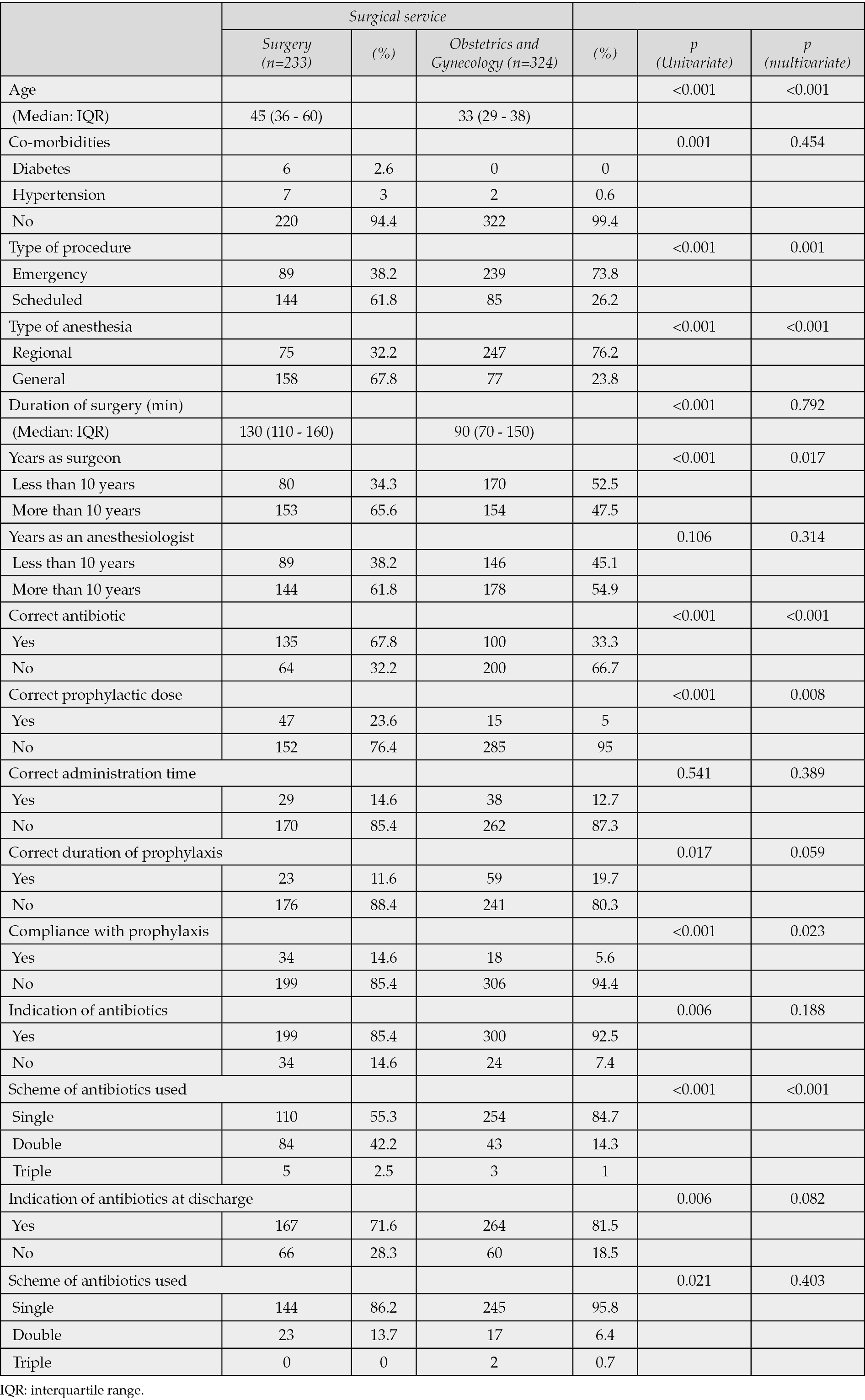
Finally, when comparing the characteristics of the patients with the surgical service we observed that in the univariate analysis multiple variables statistically differed between the two services, while in the multivariate analysis only age, type of procedure, type of anesthesia, years as surgeon, correct antibiotic, correct dose, correct duration, compliance with prophylaxis and the antibiotic scheme used statistically differed between the services (Table 3).
Table 3 - Comparison of factors related to compliance according to surgical service at the Hospital II - Essalud, Huánuco (n=557).
DISCUSSION
Adherence to antibiotic prophylaxis guidelines is crucial to prevent infections in patients undergoing surgical interventions. However, despite the well-established recommendations in clinical practice guidelines, adherence to these guidelines is often deficient. In our study, we found a compliance rate of only 9.3%. Jaber et al. found that only 13.3% of all procedures adequately followed the surgical guidelines, and there was a relationship between the presence of SSIs and non-adherence to the guidelines [14]. A national study in the United States found that 59% of surgical procedures adhered to the guidelines [8], while Abdel et al. reported that the overall adherence was only 2.7% of all interventions [15]. A Congolese study found that the overall adherence was 0% when considering all parameters as correct [16].
There was a significant difference in the age of the patients according to the service. This is to be expected because gynecology and obstetrics patients are usually younger, with a higher percentage of cesarean sections. However, age may influence the lower compliance with guidelines by considering that younger patients are more likely to present better response. Machado et al. found that compliance with prophylaxis guidelines was lower in younger patients [17].
There was a significantly higher frequency of co-morbidities in the general surgery service group. Although these results are expected due to the nature of the service of having patients with co-morbidities, it is essential that future studies evaluate how these co-morbidities can affect the indication of prophylaxis and avoid complications, particularly in this high-risk group.
We found that scheduled surgical procedures were more frequent in the general surgery service, while gynecology had more emergency procedures. This could be due to the contribution of emergency cesarean sections in the group of gynecological surgeries. This higher frequency may have contributed to poorer adherence to the guidelines since studies in the United States, Colombia, and Jordan found that the inappropriate use of prophylaxis or the risk of continuing prophylactic treatment beyond necessary was higher in emergency interventions [15, 18, 19]. It is necessary for prophylaxis guidelines to emphasize that prophylaxis is equally effective in both scheduled and emergency procedures since prescribers may consider that the type of procedure could affect surgical outcomes and that additional measures may be required to ensure patient safety during emergency procedures.
There was a significant difference in the type of anesthesia used according to the surgical service. This is also affected by the high contribution of cesarean sections, which require only regional anesthesia to ensure the health of the neonate. It is also important to note that some authors consider that regional anesthesia is more likely to receive adequate antibiotic prophylaxis compared to general anesthesia [20]. Future studies should consider the pros and cons of different types of anesthesia and how they may influence the proper indication of antibiotic prophylaxis.
There was a significant difference in the duration of surgery according to the service, which could be due to the complexity of surgical interventions in the general surgery service. Giordano found that the duration of surgery was related to the correct administration of prophylaxis when the procedure required antibiotic prophylaxis according to prophylaxis guidelines [21]. A systematic review demonstrated that the longer the duration of surgery, the higher the risk of SSIs, with increases of 13%, 17%, and 37% in the probability of SSI for every 15 minutes, 30 minutes, and 60 minutes of surgery, respectively [22].
A significant difference was observed in the years of experience of the surgeon according to service, with fewer years of experience in gynecology and obstetrics. There is still very little information about how age influences antibiotic prophylaxis. Fang et al. reported that although a higher use of antibiotic prophylaxis was observed in surgeons with more years of experience, the analysis was not significant [23]. However, Kumar et al. found that surgeons with less than 5 years of experience and under 40 years of age were more likely to administer antibiotic prophylaxis compared to older surgeons [24]. The univariate analysis by Giusti et al. showed that surgeons with less than 18 years of experience tended to better adhere to guidelines [25].
We found a significant difference in the correct choice of antibiotics and surgical service, which remained in the multivariate analysis, and was also described by Mousavi et al. [26]. This is largely aided by the widespread use of ceftriaxone in biliary tract procedures, which most guidelines consider as an appropriate, albeit not first line, antibiotic [5]. This is consistent with a large number of studies reporting that cefazolin and ceftriaxone were the most commonly used antibiotics in antibiotic prophylaxis [7, 15-17, 27]. We also observed a better indication of the correct dose in the general surgery service.
We found no differences between services in terms of administration time, which is consistent with several studies, in which this feature was the least compliant [27-30]. This might be explained by the fact that in our hospital, as in several others, the anesthesiologist is responsible for administering the antibiotic, and the anesthesiologists are the same for both services.
It was of note that the duration of prophylaxis was lower in the gynecology and obstetrics service. This can be partly explained by the fact that most interventions in this service have a short postoperative stay, with a resulting shorter duration of antibiotics, although this is not usual in most studies in which it is one of the least compliant characteristics [15, 31, 32].
The antibiotic regimen used differed between services. This is a fairly expected result, as general surgeons tend to use broad coverage for entry into the abdominal cavity and intestinal tract, which does not occur in gynecology and obstetrics. For example, Choi et al. found that 83.1% of patients received a combination of antibiotics, with the most frequent combination being the use of cephalosporins plus aminoglycosides [7].
Interestingly, we found that the gynecology and obstetrics service tend to indicate antibiotics more frequently at discharge. This is a frequent finding in this type of service. For example, Alexiou et al. reported that 15% of gynecologists followed this trend [33]. Aulakh et al. and Romero et al. reported that up to 100% of patients received antibiotics after surgery [34, 35]. Inadequate prophylaxis is characterized by unnecessary use of broad-spectrum agents and prolongation of use longer than the recommended time [27].
Finally, there was better overall compliance with the four characteristics of antibiotic prophylaxis in the general surgery department. This is contrary to what was found by Kremer et al., who reported that in interventions in which entry into the abdominal cavity was required, proper adherence to antimicrobial prophylaxis significantly decreased [36].
One promising intervention strategy is the implementation of comprehensive educational programs targeting health care professionals involved in antibiotic prescribing and prophylaxis decision-making [37]. These programs provide up-to-date information on current guidelines, highlight the fundamentals of appropriate prophylaxis, and address common misconceptions [38]. By increasing knowledge and awareness, these educational initiatives have the potential to positively influence prescribing practices. Additionally, many hospitals have adopted collaborative teams consisting of health care professionals from various disciplines, including surgeons, obstetrician/gynecologists, infectious disease specialists, and pharmacists. The formation of multidisciplinary teams is aimed at developing local guidelines, foster consensus, and engage in regular discussions [4, 28, 39]. This approach enhances knowledge sharing and nurtures a culture of appropriate prophylaxis. It is essential to tailor the implementation of these intervention strategies to the specific health care settings, considering resource availability, local practices, and cultural factors. By customizing these strategies, we can maximize their effectiveness and ensure relevance in diverse health care contexts [40].
Although the study was designed with rigor, it is important to acknowledge several limitations that should be considered for comprehensive interpretation of the results. Firstly, due to the focus on a single institution, the generalizability of the findings to other hospitals or populations may be limited. The practices and characteristics of surgical and gynecology/obstetrics services in other settings may differ, potentially influencing compliance with antibiotic prophylaxis. Moreover, while the study encompassed both elective and emergency surgical interventions, it is essential to recognize that the results might vary for different surgical specialties or specific types of surgical procedures. Each specialty may have unique considerations and guidelines that impact antibiotic prophylaxis practices, potentially leading to variations in compliance rates. Another limitation pertains to the potential exclusion of interventions with incomplete but relevant information, which could have impacted the study outcomes. The exclusion of such cases might introduce bias and affect the overall representation of antibiotic prophylaxis compliance in the study population. Furthermore, an additional limitation is the lack of data on SSIs that could have developed due to inadequate use of antibiotic prophylaxis. Although our study assessed compliance and appropriateness of antibiotic prophylaxis practices, the availability of data on actual SSIs was limited. Consequently, direct measurement of the impact of non-compliance or inappropriate prophylaxis on SSI occurrence was not feasible.
In conclusion, we found differences in the patterns of antibiotic prescription and compliance with prophylaxis guidelines between the general surgery and gynecology-obstetrics departments at Hospital II-EsSalud, Huánuco. In general, the choice of prophylactic antibiotic and its dosage, as well as overall compliance with antibiotic prophylaxis, was better in the general surgery department compared to gynecology-obstetrics. These findings are relevant because they reveal the importance of evaluating the differences in prophylaxis compliance between departments to determine focused interventions and improvement proposals.
Author contribution statement
All authors reviewed the results and approved the final version of the manuscript. All authors agreed to be responsible for all aspects of the work to ensure the accuracy and integrity of the published manuscript.
Ethics statement
The authors declare that the published work reflects an investigation and analysis carried out truthfully and completely. The ethics committee of Hospital II-EsSalud approved the project through document 183-D-RAHU-ESSALUD-2019.
Funding
None.
Conflicts of interest
The authors declare no conflicts of interest.
REFERENCES
[1] Hweidi IM, Zytoon AM, Hayajneh AA, Obeisat SMA, Hweidi AI. The effect of intraoperative glycemic control on surgical site infections among diabetic patients undergoing coronary artery bypass graft (CABG) surgery. Heliyon. 2021; 7 (12). doi: 10.1016/j.heliyon.2021.e08529
[2] Vecchia M, Colaneri M, Sacchi P, et al. Implementation of an antimicrobial stewardship program in the Vascular Surgery ward of a university tertiary care hospital in Pavia, Northern Italy. BMC Infect Dis. 2023; 23 (1), 138. doi: 10.1186/s12879-023-08061-x
[3] Loong LS, Siew Mei Lai P, Jamaluddin NAH, et al. Comparing the appropriateness of antimicrobial prescribing among medical patients in two tertiary hospitals in Malaysia. J Infect Dev Ctries. 2022; 16 (12), 1877-1886. doi: 10.3855/jidc.15925
[4] Baker AL, McElrath A, Giancola SE, Schumaker AL, Barsoumian AE. A multidisciplinary approach to improvements in perioperative antibiotic prophylaxis at a military treatment facility. Mil Med. Published online February 10, 2023: usad016. doi: 10.1093/milmed/usad016
[5] Bratzler DW, Dellinger EP, Olsen KM, et al. Clinical Practice Guidelines for Antimicrobial Prophylaxis in Surgery. Surg Infect. 2013; 14 (1), 73-156. doi: 10.1089/sur.2013.9999
[6] Alamrew K, Tadesse TA, Abiye AA, Shibeshi W. Surgical antimicrobial prophylaxis and incidence of surgical site infections at Ethiopian Tertiary-Care Teaching Hospital. Infect Dis. 2019; 12, 1178633719892267. doi: 10.1177/1178633719892267
[7] Choi WS, Song JY, Hwang JH, Kim NS, Cheong HJ. Appropriateness of antibiotic prophylaxis for major surgery in Korea. Infect Control Hosp Epidemiol. 2007; 28 (8), 997-1002. doi: 10.1086/519180
[8] Cabral SM, Harris AD, Cosgrove SE, Magder LS, Tamma PD, Goodman KE. Adherence to antimicrobial prophylaxis guidelines for elective surgeries across 825 United States Hospitals, 2019-2020. Clin Infect Dis. Published online February 12, 2023: ciad077. doi: 10.1093/cid/ciad077
[9] Allaf Navirian H, Navyashree GA. Antimicrobial prophylaxis uses and incidence of surgical site infection in Jayanagar General Hospital, Bangalore, India. J Fam Med Prim Care. 2022; 11 (3), 1179-1183. doi: 10.4103/jfmpc.jfmpc_1068_21
[10] Mazuski JE, Symons WJ, Jarman S, et al. Reduction of Surgical site infection after trauma laparotomy through use of a specific protocol for antibiotic prophylaxis. Surg Infect. 2023; 24 (2), 141-157. doi: 10.1089/sur.2022.393
[11] Arteaga-Livias K, Panduro-Correa V, Maguiña JL, et al. Compliance with antibiotic prophylaxis in obstetric and gynecological surgeries in two Peruvian hospitals. Antibiot Basel Switz. 2023; 12 (5), 808. doi: 10.3390/antibiotics12050808
[12] Garner JS. CDC Guideline for Prevention of Surgical Wound Infections, 1985. Infect Control Hosp Epidemiol. 1986; 7 (3), 193-200. doi: 10.1017/S0195941700064080
[13] IETSI. Guía de Práctica Clínica para la Profilaxis Antibiótica en Procedimientos Quirúrgicos. Guía en Versión Corta. GPC N°5. Perú. Published online Setiembre 2017.
[14] Jaber S, Rogers C, Sunderland B, et al. Appropriateness of surgical antibiotic prophylaxis for breast surgery procedures. Int J Clin Pharm. 2017; 39 (2), 483-486. doi:10.1007/s11096-017-0434-6
[15] Abdel Jalil MH, Abu Hammour K, Alsous M, et al. Noncompliance with surgical antimicrobial prophylaxis guidelines: A Jordanian experience in cesarean deliveries. Am J Infect Control. 2018; 46 (1), 14-19. doi: 10.1016/j.ajic.2017.06.033
[16] Mbuyamba HT, Muamba CM, Binene SK, Uwonda SA. Evaluation of the practice of surgical antibiotic prophylaxis in a Zonal Referral Hospital in Mbujimayi, Democratic Republic of the Congo (DRC). BMC Surg. 2023; 23 (1), 28. doi: 10.1186/s12893-023-01926-7
[17] Machado-Alba JE, Morales-Plaza CD, Ossa-Aguirre DF. Adherencia a la antibioterapia prequirúrgica en intervenciones ginecoobstétricas en el Hospital Universitario San Jorge, Pereira, Colombia, 2010: Estudio de corte transversal. Rev Colomb Obstet Ginecol. 2013; 64 (1), 38-45.
[18] Machado-Alba JE, Morales-Plaza CD, Solarte MJ. Adherencia a antibioterapia prequirúrgica en intervenciones torácicas y abdominales en el Hospital Universitario San Jorge, de Pereira. Rev Cienc Salud. 2013; 11 (2), 205-216.
[19] Bardia A, Treggiari MM, Michel G, et al. Adherence to guidelines for the administration of intraoperative antibiotics in a nationwide US sample. JAMA Netw Open. 2021; 4 (12), e2137296. doi: 10.1001/jamanetworkopen.2021.37296
[20] Della Polla G, Bianco A, Mazzea S, Napolitano F, Angelillo IF. Preoperative Antibiotic Prophylaxis in Elective Minor Surgical Procedures among Adults in Southern Italy. Antibiot Basel Switz. 2020; 9 (10), E713. doi: 10.3390/antibiotics9100713
[21] Giordano M, Squillace L, Pavia M. Appropriateness of surgical antibiotic prophylaxis in pediatric patients in Italy. Infect Control Hosp Epidemiol. 2017; 38 (7), 823-831. doi: 10.1017/ice.2017.79
[22] Cheng H, Chen BPH, Soleas IM, Ferko NC, Cameron CG, Hinoul P. Prolonged operative duration increases risk of surgical site infections: a systematic review. Surg Infect. 2017; 18 (6), 722-735. doi: 10.1089/sur.2017.089
[23] Fang CH, Hawn VS, Agarwal V, et al. Antibiotic prophylaxis in anterior skull-base surgery: a survey of the North American Skull Base Society. Int Forum Allergy Rhinol. 2019; 9 (10), 1196-1204. doi: 10.1002/alr.22396
[24] Kumar A, Kaistha S. Current practice of antibiotic prophylaxis in elective laparoscopic cholecystectomy among surgeons of the Armed Forces Medical Services of India. Med J Armed Forces India. 2022; 78 (2), 192-197. doi: 10.1016/j.mjafi.2020.12.014
[25] Giusti A, Spila Alegiani S, Ciofi Degli Atti ML, et al. Surgical antibiotic prophylaxis in children: a mixed method study on healthcare professionals attitudes. BMC Pediatr. 2016; 16 (1), 203. doi: 10.1186/s12887-016-0739-y
[26] Mousavi S, Zamani E, Bahrami F. An audit of perioperative antimicrobial prophylaxis: Compliance with the international guidelines. J Res Pharm Pract. 2017; 6 (2), 126. doi: 10.4103/jrpp.JRPP_16_164
[27] Nagdeo N, Sonarkar R, Thombare VR, Akhtar M, Dasgupta S. Effects of an educational module in rationalizing surgical prophylaxis. Indian J Surg. 2015; 77 (4), 290-296. doi: 10.1007/s12262-015-1297-5
[28] Telfah S, Nazer L, Dirani M, Daoud F. Improvement in adherence to surgical antimicrobial prophylaxis guidelines after implementation of a multidisciplinary quality improvement project. Sultan Qaboos Univ Med J. 2015; 15 (4), e523-527. doi: 10.18295/squmj.2015.15.04.014
[29] Testa M, Stillo M, Giacomelli S, et al. Appropriate use of antimicrobial prophylaxis: an observational study in 21 surgical wards. BMC Surg. 2015; 15, 63. doi: 10.1186/s12893-015-0048-7
[30] Hooper TD, Hibbert PD, Hannaford NA, et al. Surgical site infection-a population-based study in Australian adults measuring the compliance with and correct timing of appropriate antibiotic prophylaxis. Anaesth Intensive Care. 2015; 43 (4), 461-467. doi: 10.1177/0310057X1504300407
[31] Alemkere G. Antibiotic usage in surgical prophylaxis: A prospective observational study in the surgical ward of Nekemte referral hospital. PloS One. 2018; 13 (9), e0203523. doi: 10.1371/journal.pone.0203523
[32] Abubakar U, Syed Sulaiman SA, Adesiyun AG. Impact of pharmacist-led antibiotic stewardship interventions on compliance with surgical antibiotic prophylaxis in obstetric and gynecologic surgeries in Nigeria. PloS One. 2019; 14 (3), e0213395. doi: 10.1371/journal.pone.0213395
[33] Alexiou VG, Ierodiakonou V, Peppas G, Falagas ME. Antimicrobial prophylaxis in surgery: an international survey. Surg Infect. 2010; 11 (4), 343-348. doi: 10.1089/sur.2009.023
[34] Aulakh A, Idoko P, Anderson ST, Graham W. Caesarean section wound infections and antibiotic use: a retrospective case-series in a tertiary referral hospital in The Gambia. Trop Doct. 2018; 48 (3), 192-199. doi: 10.1177/0049475517739539
[35] Romero Viamonte K, Salvent Tames A, Sepúlveda Correa R, Rojo Manteca MV, Martín-Suárez A. Compliance with antibiotic prophylaxis guidelines in caesarean delivery: a retrospective, drug utilization study (indication-prescription type) at an Ecuadorian hospital. Antimicrob Resist Infect Control. 2021; 10 (1), 12. doi: 10.1186/s13756-020-00843-1
[36] Kremer KM, Foster RT, Drobnis EZ, Hyde KJ, Brennaman LM. Non-indicated use of prophylactic antibiotics in gynaecological surgery at an academic tertiary medical centre. J Obstet Gynaecol. 2018; 38 (4), 543-547. doi: 10.1080/01443615.2017.1371119
[37] Alshehhi HS, Ali AA, Jawhar DS, et al. Assessment of implementation of antibiotic stewardship program in surgical prophylaxis at a secondary care hospital in Ras Al Khaimah, United Arab Emirates. Sci Rep. 2021; 11 (1), 1042. doi: 10.1038/s41598-020-80219-y
[38] Knox MC, Edye M. Educational antimicrobial stewardship intervention ineffective in changing surgical prophylactic antibiotic prescribing. Surg Infect. 2016; 17 (2), 224-228. doi: 10.1089/sur.2015.194
[39] Ahmed NJ, Almalki ZS, Alfaifi AA, et al. Implementing an antimicrobial stewardship programme to improve adherence to a perioperative prophylaxis guideline. Healthc Basel Switz. 2022; 10 (3), 464. doi: 10.3390/healthcare10030464
[40] Cameron M, Jones S, Adedeji O. Antibiotic prophylaxis audit and questionnaire study: Traffic Light Poster improves adherence to protocol in gastrointestinal surgery. Int J Surg Lond Engl. 2015; 19, 112-115. doi: 10.1016/j.ijsu.2015.05.008